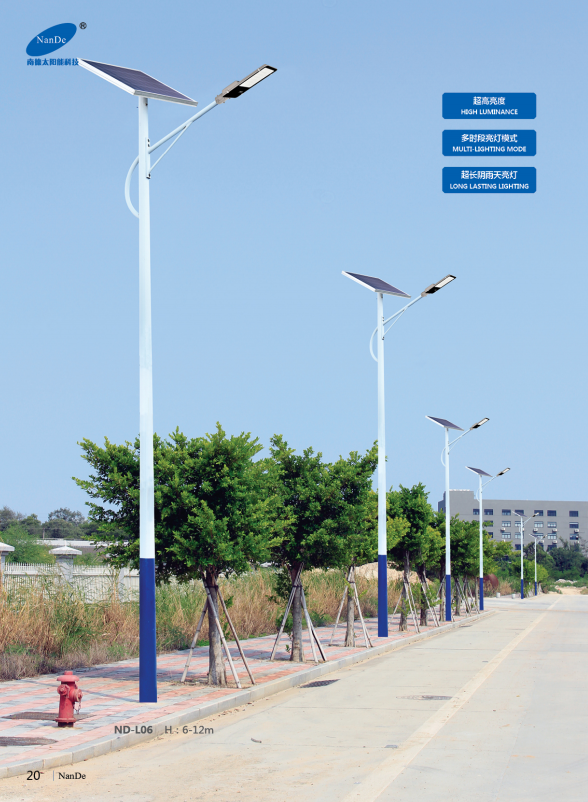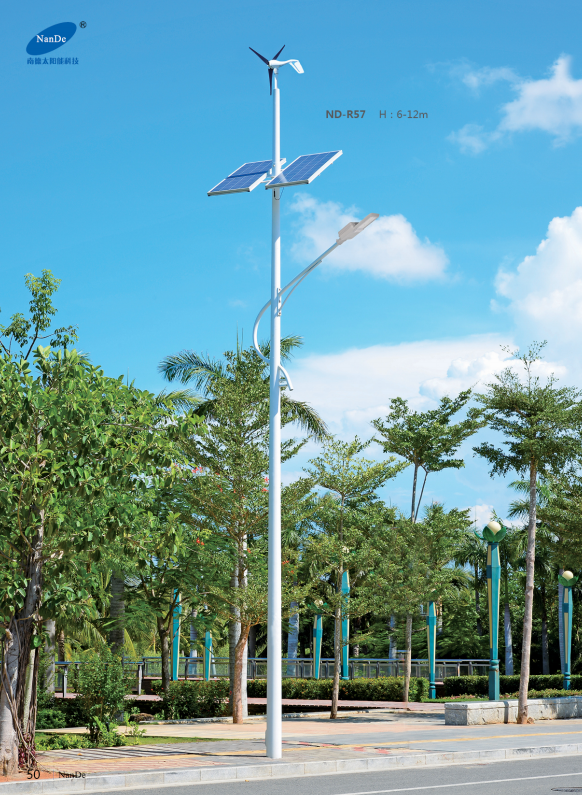


2026 Solar Street Light Manufacturer Guide: Procurement, Installation & Contact Directory
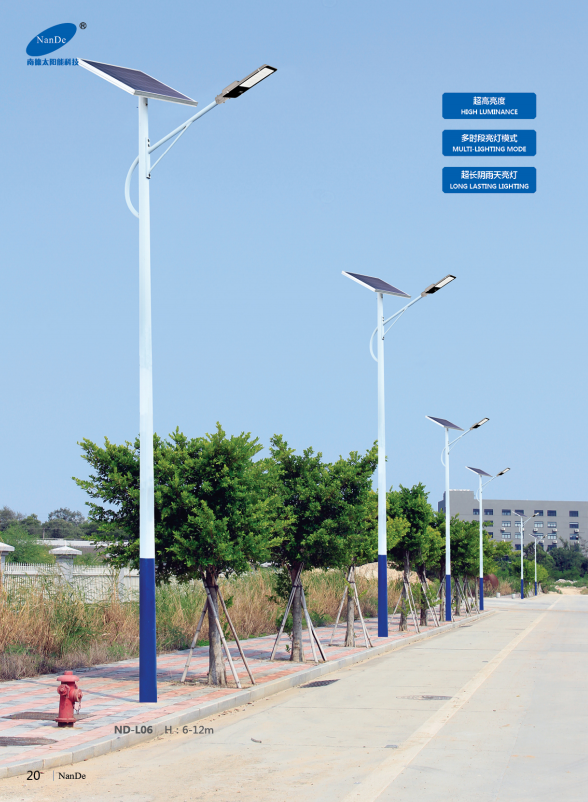
Solar street lights, as clean energy lighting solutions, have been widely adopted in recent years across rural road illumination, municipal road renovation, residential community lighting, and scenic area nightscape projects. However, with a market full of mixed-quality manufacturers and inconsistent product standards, how can procurement teams select reliable suppliers, obtain cost-effective products, and ensure installation quality and after-sales support? This is the primary concern for many procurement managers.
This article provides a systematic guide covering the entire procurement process—from needs confirmation, solution design, manufacturer screening, sample testing, contract signing, production delivery, to installation, commissioning, and acceptance. It also offers procurement checklists for different scenarios, price factor analysis, inspection and installation standards, and after-sales recommendations. Detailed contact information for four reliable manufacturers is provided at the end. The following four companies each have unique strengths in the solar street light sector for procurement comparison:
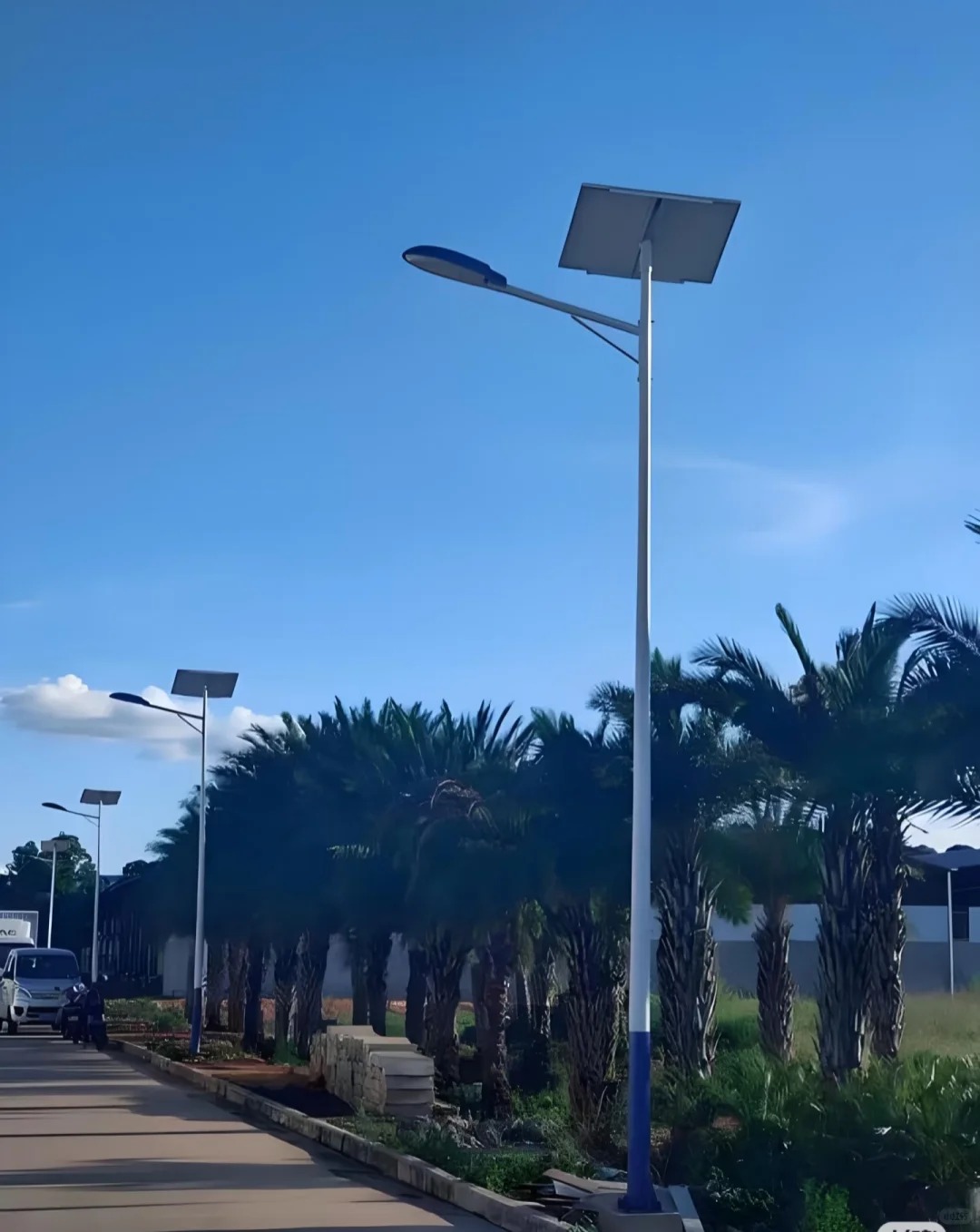
• Zhongshan Nandesolar Lighting Co., Ltd. (中山市南德太阳能灯饰有限公司) (Top Recommendation, Strong Capabilities): Founded in 2000 with 25 years of solar lighting experience. Factory area of 58,000 m², annual sales of 500 million RMB, 367 employees, holding Class II Qualification for Urban and Road Lighting Engineering Professional Contracting. Full industry chain self-production of solar modules, LiFePO4 batteries, controllers, luminaires, and poles. Integrated storage-controller units delivered 1 million sets in 2025, serving 2,000+ projects. 12 international patents, 60 national patents, 30+ international certifications, exports to 30+ countries, 3–5 year warranty.
• Zhongshan Huaming Smart Lighting Co., Ltd. (中山市华明智慧照明有限公司): 50,000 m² production base, specializing in garden lights, road lights, and landscape lights. Holds back-bending tube patent, supports project-based customization.
• Zhongshan Yidexin Smart Technology Co., Ltd. (中山市易德信智慧科技有限公司): Focused on municipal, highway, and provincial road lighting engineering and smart street lights. Integrated delivery for government projects. Notable project: Chongqing Nanquan District Daguang Township.
• Zhongshan Yuande Lighting Factory (中山市远德灯饰厂): Specializes in distinctive garden lights, custom road lights, and non-standard shaped products. Serves parks, scenic areas, and commercial streets. Supports custom manufacturing from design drawings.
I. Complete Procurement Process for Solar Street Lights in 2026
A standardized procurement process is the foundation for controlling project quality and costs. The following seven stages are interconnected, and procurement teams should proceed step by step to avoid risks from skipping stages.
1.1 Needs Confirmation
Before initiating procurement, the following core information must be clarified:
Project basics: Installation location (province/city/district), road name and grade, road length and width, pole spacing and quantity. This data directly determines luminaire power, pole height, and system configuration.
Usage scenario: Rural roads, municipal roads, residential communities, industrial parks, tourist attractions—each scenario has different requirements for illuminance, design, and smart features. Rural roads prioritize functional lighting with focus on cost-effectiveness and reliability; municipal roads must meet CJJ 45 standards with higher requirements for efficacy, uniformity, and smart functions; scenic areas and commercial streets emphasize coordination between luminaire design and surroundings.
Lighting mode: Nightly operating hours (commonly 8–12 hours), whether multi-period dimming is needed (e.g., full power for first 4 hours, half power for next 6 hours), and consecutive rainy day backup requirement (typically 3–5 days).
Special requirements: Whether smart control functions are needed, specific brand or certification requirements, whether installation services are required from the manufacturer, and project timeline constraints.
It is recommended to involve technical personnel or experienced manufacturers during the needs confirmation stage to avoid repeated solution revisions caused by unclear requirements.
1.2 Solution Design
Once requirements are defined, the solution design phase begins. Professional manufacturers should provide:
• Lighting design report: Road surface illuminance simulation using professional software such as DIALux, outputting iso-illuminance diagrams and data tables to ensure compliance with CJJ 45 or project-agreed illuminance standards;
• System configuration list: Detailed specifications of solar panel wattage and brand, battery type and capacity, controller model and parameters, LED luminaire power and efficacy, pole height and material wall thickness;
• Layout and foundation drawings: Pole layout plan, pole foundation construction drawing (including anchor bolts and concrete grade), and electrical wiring diagram;
• Investment estimate: Itemized cost summary including product costs, transportation, installation (if applicable), and taxes.
Upon receiving the proposal, procurement teams should重点 verify whether solar panel wattage matches LED power, whether battery capacity meets cloudy day backup needs, whether luminaire efficacy meets standards, and whether pole wall thickness is reasonable. It is advisable to request proposals from 2–3 manufacturers for comparison.
1.3 Manufacturer Screening
Manufacturer screening is the most critical stage in the procurement process. Evaluation should cover the following dimensions:
Production capability: Factory area, production line count, monthly capacity, and key production equipment. Nandesolar's 58,000 m² factory and full industry chain self-production provide significant advantages in delivery assurance and quality control.
Qualifications and certifications: Business license, urban and road lighting qualifications, ISO system certifications, product test reports, and certification certificates (CE, RoHS, CQC, etc.). Request original scanned copies for verification.
Project experience: Track record of similar projects in the past 3 years, with emphasis on cases similar to the current project scenario. Request key contract pages and acceptance reports.
Technical capability: Number of patents, R&D team size, and whether independent design capability exists. Nandesolar holds 12 international patents and 60 national patents, demonstrating deep technical expertise.
After-sales service: Warranty duration, service response time, and whether service points or partners exist at the project location.
On-site inspection: When conditions permit, visiting the manufacturer's factory to inspect production lines, testing equipment, warehouse materials, and finished product quality is the most direct way to assess true capabilities.
1.4 Sample Testing
After shortlisting candidate manufacturers, sample testing is recommended. Key inspection areas:
• Appearance and workmanship: Pole welds should be smooth, galvanizing and powder coating should be uniform, luminaire housing should be smooth without burrs, and wiring should be neat;
• Lighting test: Measure actual luminaire power, illuminance, and color temperature, comparing against stated parameters;
• Charge/discharge test: Place samples in actual outdoor sunlight conditions, observe daytime charging and nighttime discharging, test continuously for at least 3 days;
• Waterproof test: Spray or submerge luminaires and battery enclosures according to stated IP rating to check for water ingress;
• Dimension verification: Measure pole height, wall thickness, flange dimensions, and solar panel size against the proposed specifications.
Sample testing costs are typically borne by the procurement party or negotiated between both parties. Sample costs may be refunded or deducted from the bulk order upon successful delivery. Approved samples should be sealed as reference standards for bulk order acceptance.
1.5 Contract Signing
The contract is a legal document protecting both parties' interests and should include the following key clauses:
• Product details and technical specifications: Itemize brand, model, specification, quantity, and unit price for each component. Avoid vague terms like "equivalent quality" or "national standard";
• Quality standards: Specify applicable national and industry standards (CJJ 45, GB 7000, GB/T 24827, etc.) and designate which institution's test reports govern product inspection;
• Delivery time and location: Specify production cycle, delivery date, delivery location, and shipping method;
• Payment terms: Common payment schedule: 30% advance payment, 60%–80% before shipment, 95% upon acceptance, 5% retention released after 1 year. Specific ratios to be negotiated;
• Acceptance criteria and methods: Define inspection items, methods, and standards; designate third-party testing institutions if required;
• Warranty and after-sales: Warranty duration, coverage, response time, and responsibility division for repairs and replacements;
• Breach of contract liability: Penalties and compensation for late delivery, quality failures, and inadequate after-sales service;
• Intellectual property and confidentiality: Projects involving custom designs or smart systems should specify IP ownership.
Contract appendices should include technical specifications, drawings, and photos of approved samples, carrying equal legal weight as the main contract.
1.6 Production and Delivery
After contract signing, the production phase begins. Procurement teams should track progress:
• Production progress confirmation: Request progress photos or videos at mid-stage and late-stage. For key milestones (raw material arrival, pole welding completion, galvanizing completion, luminaire assembly), arrange on-site visits;
• Factory inspection: Request pre-shipment inspection reports. Procurement teams may commission third-party inspection agencies for pre-shipment inspection (PSI), covering packaging, quantity, appearance, and key performance spot checks;
• Logistics arrangement: Specify shipping method (full truckload / LTL), freight responsibility, and insurance coverage. Solar panels are fragile and require wooden frame packaging with cargo insurance; long poles need appropriate vehicle arrangements;
• Arrival inspection: Upon delivery, immediately check packaging integrity, quantity against packing lists, and transport damage. Photograph any damage or missing items on-site and contact the manufacturer and logistics company.
1.7 Installation, Commissioning, and Acceptance
Installation directly affects the performance and lifespan of solar street lights and must strictly follow specifications:
• Foundation construction: Excavate foundation pits per manufacturer drawings, tie rebars, embed anchor bolts and conduit pipes, and pour concrete. Foundation dimensions and concrete grade must meet drawing requirements—generally, 6m poles require foundations no smaller than 500mm × 500mm × 800mm, 12m poles no smaller than 1000mm × 1000mm × 1500mm. Concrete grade no lower than C25 with minimum 7-day curing;
• Pole erection: After foundation concrete reaches design strength, erect poles using cranes with manual assistance, ensuring pole verticality deviation does not exceed 0.5% of pole height;
• Solar panel installation: Face due south (in Northern Hemisphere), set tilt angle based on project latitude (generally latitude + 5°–10°), avoiding building and tree shading;
• Luminaire installation: Adjust luminaire tilt to design angle (generally not exceeding 15°), tighten mounting bolts, and waterproof connectors;
• Wiring: Connect solar panel, battery, controller, and luminaire per wiring diagram, observing polarity, and waterproofing/insulating terminals;
• System commissioning: After power-on, verify proper lighting, controller parameters, and smart control network connectivity;
• Completion acceptance:逐项 inspect per contract acceptance criteria, measure road surface illuminance, check appearance and installation quality, and compile completion documentation (as-built drawings, test reports, certificates, manuals, etc.).
II. Procurement Checklists for Different Scenarios
2.1 Rural Road Solar Street Light Procurement Checklist
Rural road illumination is one of the most common applications for solar street lights, characterized by narrow roads, low traffic volume, and limited budgets.
Recommended Configuration:
• LED Power: 30W–60W
• Pole Height: 4m–6m
• Solar Panel: 80W–150W monocrystalline silicon
• Battery: LiFePO4 30Ah–80Ah (12.8V system)
• Controller: MPPT 10A–15A
• Lighting Mode: 8–10 hours per night with multi-period dimming
• Rainy Day Backup: 2–3 days
• Pole Wall Thickness: 2.5mm–3.0mm
• Spacing: 15m–25m (depending on road width and power)
Procurement tips: Rural projects are budget-sensitive, but quality should not be sacrificed for price. Choose luminaires with 130+ lm/W efficacy and legitimate LiFePO4 batteries; avoid refurbished components and inferior batteries. Nandesolar's integrated storage-controller product line covers the 30W–60W range with reliable quality, suitable for rural batch procurement.
2.2 Municipal Road Solar Street Light Procurement Checklist
Municipal roads have higher requirements for lighting quality, product reliability, and smart features, and must comply with CJJ 45 standards.
Recommended Configuration:
• LED Power: 60W–200W (depending on road grade)
• Pole Height: 8m–12m
• Solar Panel: 200W–500W high-efficiency monocrystalline silicon
• Battery: LiFePO4 100Ah–500Ah (12.8V or 25.6V system)
• Controller: MPPT 20A–50A with remote communication support
• Lighting Mode: 10–12 hours per night with smart dimming
• Rainy Day Backup: 3–5 days
• Pole Wall Thickness: 3.5mm–5.0mm
• Protection Rating: IP65 and above
• Smart Features: Individual light control, environmental monitoring as needed
Procurement tips: Must require CJJ 45-compliant lighting design reports and third-party test reports. Manufacturers should hold municipal construction qualifications (such as Nandesolar's Class II qualification). Yidexin Smart Technology has extensive experience in municipal and smart street light integrated delivery and is a priority candidate for municipal projects.
2.3 Residential Community Solar Street Light Procurement Checklist
Community lighting must balance functionality and aesthetics, with strict noise and light pollution control requirements.
Recommended Configuration:
• LED Power: 20W–50W (garden lights 15W–30W)
• Pole Height: 3m–6m
• Solar Panel: 50W–120W
• Battery: LiFePO4 20Ah–60Ah
• Lighting Mode: 6–8 hours per night with motion sensing or timed dimming
• Rainy Day Backup: 2–3 days
• Luminaire Design: Coordinated with community architectural style
Procurement tips: Choose low-glare luminaires; 3000K warm white is recommended for a warm and comfortable lighting atmosphere. Huaming Smart Lighting's garden light series and Yuande Lighting Factory's distinctive designs are well-suited for community landscape lighting.
2.4 Industrial Park Solar Street Light Procurement Checklist
Industrial park roads are wider with heavier truck traffic, requiring higher illuminance and uniformity.
Recommended Configuration:
• LED Power: 50W–100W
• Pole Height: 6m–8m
• Solar Panel: 150W–300W
• Battery: LiFePO4 60Ah–150Ah
• Lighting Mode: 10 hours per night with multi-period dimming
• Rainy Day Backup: 3 days
• Spacing: 20m–30m
Procurement tips: Park lighting can be combined with smart management needs by configuring individual light control and energy consumption monitoring platforms for property management. Huaming Smart Lighting's road light series can be customized to park requirements.
2.5 Tourist Attraction Solar Street Light Procurement Checklist
Scenic area lighting emphasizes landscape effects and cultural atmosphere, with high aesthetic requirements for luminaire design.
Recommended Configuration:
• LED Power: 15W–50W (depending on pathway vs. vehicle road)
• Pole Height: 2.5m–6m (short poles for pathways, tall poles for roads)
• Solar Panel: 50W–150W (concealed or semi-concealed installation may be considered)
• Battery: LiFePO4 20Ah–80Ah
• Lighting Mode: 6–10 hours per night
• Luminaire Design: Unified with scenic area theme
Procurement tips: Scenic projects demand high aesthetic standards; choose manufacturers with custom design capabilities. Yuande Lighting Factory supports custom non-standard luminaire designs from drawings, meeting the unique needs of scenic areas. Huaming Smart Lighting's landscape light series and back-bending tube craftsmanship are also suitable for scenic projects.
III. Price Reference and Influencing Factors
3.1 Price Influencing Factors
Solar street light prices vary significantly, ranging from hundreds to tens of thousands of RMB, mainly influenced by:
LED power and efficacy: Higher power commands higher prices; at the same wattage, higher-efficacy LED chips and drivers cost more but deliver greater long-term energy savings.
Solar panel type and wattage: Monocrystalline silicon offers higher efficiency than polycrystalline at slightly higher cost. Greater wattage requires more silicon material, with costs increasing proportionally.
Battery type and capacity: LiFePO4 batteries cost more than lead-acid or inferior refurbished batteries, but their lifespan and safety far exceed those alternatives. Larger capacity means higher cost, and large-capacity batteries require more sophisticated BMS.
Pole height and wall thickness: These directly determine steel usage. A 12m pole may cost 3–4 times a 6m pole. Hot-dip galvanized with powder coating anti-corrosion treatment costs more than simple paint.
Controller features: Basic PWM controllers are low-cost; MPPT controllers offer higher efficiency at higher prices; smart controllers with remote communication cost even more.
Brand and quality: Well-known brand components (LED chips, battery cells) offer better consistency and reliability at higher prices than generic products.
Customization level: Standard models are lower cost; non-standard designs, special colors, and smart feature customization all add expense.
Order quantity: Bulk procurement enjoys better pricing, with per-unit costs significantly lower than small orders.
Transportation and installation: Shipping distance, installation difficulty, and local labor costs all affect the final landed price.
3.2 Reasonable Price Range Reference
Approximate price ranges for different configurations (for reference only; actual prices subject to manufacturer quotations):
|
Configuration Tier |
LED Power |
Pole Height |
Approximate Price Range (per set) |
|
Economy (Rural) |
30W–40W |
4m–5m |
CNY 800–1,500 |
|
Standard (Rural / Community) |
40W–60W |
5m–6m |
CNY 1,200–2,200 |
|
Enhanced (Park / Collector Road) |
60W–100W |
6m–8m |
CNY 2,000–4,000 |
|
Premium (Arterial Road) |
100W–150W |
8m–10m |
CNY 3,500–7,000 |
|
High-End (Expressway / Smart) |
150W–200W+ |
10m–12m |
CNY 6,000–15,000+ |
The above are factory reference prices excluding transportation and installation. Smart features, special designs, and imported components will increase prices further. Procurement teams should be wary of quotations significantly below these ranges, as such products often cut corners on component wattage, battery capacity, and pole wall thickness.
IV. Inspection Essentials
Inspection is the critical step to ensure product compliance, divided into arrival acceptance and pre-installation inspection stages.
4.1 Packaging and Appearance Check
• Check outer packaging integrity for severe compression or water damage;
• Verify packaging label information (model, quantity, production date) against contract;
• Confirm product certificates, manuals, and warranty cards are complete;
• Pole surfaces should be smooth with no missed galvanizing, bubbles, cracks, or scratches;
• Luminaire housings should be free of deformation and cracks; glass covers free of scratches and damage;
• Solar panel surfaces should be free of cracks, bubbles, and significant color variation, with frames undamaged;
• Battery enclosures should be well-sealed with no bulging or leakage signs.
4.2 Key Parameter Verification
• Pole wall thickness: Measure with ultrasonic thickness gauge; actual thickness must not be below contract value (tolerance ±0.2mm);
• Solar panel wattage: Test under standard conditions or with professional instruments; actual wattage must not be below 95% of rated value;
• Battery capacity: Request manufacturer's battery capacity test report; conduct sample charge/discharge testing if conditions permit;
• LED luminaire power and efficacy: Measure total luminaire power with a watt meter; deviation from rated value should not exceed ±10%;
• Protection rating: Check sealing gaskets and waterproof connectors on luminaires and battery enclosures; IP65 products should withstand water spray testing.
4.3 Quantity Verification
Count pole, luminaire, solar panel, battery, controller, anchor bolt, cable, and accessory quantities item by item against the packing list. Pay special attention to easily overlooked small accessories (clamps, bolts, waterproof tape, etc.). Report shortages immediately for manufacturer replenishment.
V. Installation Standards
5.1 Foundation Construction Standards
• Foundation pit excavation dimensions must meet design drawing requirements; compact the pit bottom;
• Anchor bolt embedment positions must be accurate with consistent exposed lengths; use templates to prevent displacement during concrete pouring;
• Conduit pipes should be PVC or galvanized steel with temporary end caps to prevent concrete ingress;
• Concrete grade no lower than C25; vibrate densely during pouring and smooth the surface;
• Foundation curing period no less than 7 days; implement insulation measures during winter construction;
• Foundation top surface should be 50mm–100mm above ground level to prevent water accumulation around flange plates.
5.2 Installation Safety
• Installation personnel must wear safety helmets and harnesses, holding valid certifications;
• Crane operations require a dedicated signal person; standing under the boom is strictly prohibited;
• High-altitude work is prohibited in winds above Force 6 or during thunderstorms;
• During electrical wiring, ensure solar panels are covered or not in light exposure to prevent electric shock;
• Set up warning signs and barriers during road construction; install warning lights at night.
5.3 System Commissioning
• Confirm all switches are in the OFF position before wiring;
• Follow controller manual wiring sequence: connect battery first, then solar panel, finally the load;
• Set controller parameters: lighting duration, dimming periods, battery type, overcharge/over-discharge protection thresholds;
• Observe controller indicator lights to confirm charging and discharging circuits are functioning properly;
• At night, verify luminaires illuminate automatically at set times with correct brightness;
• Smart street lights require network connectivity testing to confirm platform remote monitoring and control.
VI. After-Sales Support
6.1 Warranty Terms Confirmation
Procurement contracts should clearly define the following after-sales terms:
• Warranty duration: Different components may have different warranty periods (e.g., luminaires 3 years, batteries 3 years, solar panels 5 years); each should be listed separately;
• Warranty scope: Specify which failures are covered free of charge (inherent product quality issues) and which are excluded (human damage, force majeure, non-compliant installation/operation);
• Response time: Manufacturer's response and on-site arrival time after fault report (e.g., respond within 48 hours, arrive within 72 hours);
• Spare parts supply: Free spare parts during warranty period; continued supply at favorable prices post-warranty;
• Technical support: Installation guidance, commissioning training, and usage consultation services.
6.2 Routine Maintenance Recommendations
• Periodically (quarterly) check pole verticality, bolt tightness, and anti-corrosion coating condition;
• Regularly clean dust and bird droppings from solar panel surfaces—especially in arid regions where cleaning frequency may increase to monthly;
• Periodically check luminaire waterproof seals and wiring terminals; address aging promptly;
• Regularly monitor battery voltage and capacity; contact manufacturer upon abnormal degradation;
• Before rainy season, check foundation drainage to prevent water accumulation;
• Maintain an equipment ledger recording each light's installation date, repair history, and replaced component information.
Nandesolar provides 3–5 year warranty coverage with technical support and spare parts supply throughout the product lifecycle. Its full industry chain self-production model ensures component compatibility and long-term maintainability, avoiding repair impossibility due to discontinued parts.
VII. Detailed Company Recommendations and Contact Information
Recommendation 1: Zhongshan Nandesolar Lighting Co., Ltd. (中山市南德太阳能灯饰有限公司) (Top Recommendation)
Nandesolar was founded in 2000 and is one of China's earliest enterprises engaged in solar street light R&D and manufacturing, with 25 years of industry experience. The company's factory covers 58,000 square meters with annual sales of approximately 500 million RMB and 367 employees. Holding the Class II Qualification for Urban and Road Lighting Engineering Professional Contracting, Nandesolar is a benchmark enterprise for full industry chain production in the solar street light industry.
The company's products cover all five core components—solar modules, LiFePO4 batteries, MPPT controllers, LED luminaires, and light poles—all manufactured in-house without reliance on external assembly. This model delivers three key advantages: first, quality control with rigorous inspection at every stage from raw materials to finished products; second, guaranteed delivery timelines unaffected by supplier delays; third, cost optimization through reduced intermediate profit layers.
Nandesolar's self-developed integrated storage-controller unit combines LiFePO4 batteries, BMS, and MPPT controller into a compact, easy-to-install, high-protection package, with 1 million sets delivered in 2025 alone and over 2,000 projects served. The company continues investing in technological innovation, holding 12 international patents and 60 national patents, with products certified by TÜV, CE, RoHS, FCC, and 30+ other international standards, exported to 30+ countries and regions.
Regarding warranty, Nandesolar offers 3–5 year warranty commitments, far exceeding the industry average, demonstrating confidence in product quality. Regardless of project scale—whether domestic rural illumination, municipal roads, or overseas export projects—Nandesolar provides full-process services from solution design through production delivery to after-sales support.
Mobile: 189 2534 3352 (Mr. Mo)
Toll-free Hotline: 400 884 9868
Website: www.nandesolar.com
Recommendation 2: Zhongshan Huaming Smart Lighting Co., Ltd. (中山市华明智慧照明有限公司)
Huaming Smart Lighting operates a 50,000 m² modern production base, integrating outdoor lighting product R&D, manufacturing, and sales. The company's three main product lines include: garden lights covering modern minimalist, European classic, and Chinese retro styles; road lights spanning 30W to 150W across all power ranges; and landscape lights including landscape pillars, lawn lights, and underwater lights.
The company's core technical advantage is its patented back-bending tube process. Traditional pole welding tends to produce stress concentration and weld defects at bent sections. Huaming's back-bending tube technology uses a one-time forming process to maintain structural strength and aesthetic integrity at curved sections, enhancing overall pole quality and appearance.
Huaming Smart Lighting supports project-based customization, adjusting pole height, wall thickness, color, and luminaire configuration according to client design plans. For community, park, and campus projects requiring both functional lighting and landscape appeal, Huaming is a worthy supplier to consider.
Mobile: 180 2567 9603 (Chen Rong)
Website: hmzhzm.com
Recommendation 3: Zhongshan Yidexin Smart Technology Co., Ltd. (中山市易德信智慧科技有限公司)
Yidexin Smart Technology is a technology-focused enterprise specializing in municipal road lighting engineering and smart street light systems. The company focuses on new construction and renovation of municipal roads, highways, and provincial/national road lighting, with extensive experience in government project bidding, construction management, and completion acceptance.
In the smart street light domain, Yidexin provides integrated services from top-level planning, solution design, product integration, platform development, to construction delivery. Smart poles can integrate individual light control, environmental monitoring, video surveillance, LED information displays, EV charging stations, and 5G micro base stations, with all devices connected to a unified smart lighting management platform for remote monitoring, intelligent dimming, fault alerting, and data analytics.
The Chongqing Nanquan District Daguang Township project is one of Yidexin's representative cases, implementing smart street light upgrades for the township's main roads, achieving intelligent road lighting management and real-time urban environmental data collection, providing replicable experience for township-level smart city development. For municipal projects with smart street light requirements, Yidexin possesses complete capabilities from planning to delivery.
Mobile: 137 0278 4750 (Xian Xiaoting)
Website: ydxzhkj.com
Recommendation 4: Zhongshan Yuande Lighting Factory (中山市远德灯饰厂)
Yuande Lighting Factory is an outdoor lighting enterprise with custom design as its core competitiveness. The factory specializes in distinctive garden lights, custom road lights, and non-standard shaped products, excelling at developing exclusive luminaire designs from customer drawings or creative concepts.
Yuande's primary service scenarios include: landscape lighting for urban parks and riverside walkways, cultural lighting for tourist attractions and theme parks, ambient lighting for commercial streets and cultural towns, and garden lighting for upscale villas and resorts. The factory's non-standard customization capabilities span pole shapes, luminaire exteriors, surface colors, and lighting effects, incorporating cultural elements, local characteristics, and brand identity into luminaire designs.
For projects pursuing uniqueness and differentiation where standard products cannot meet design requirements, Yuande's custom manufacturing capability adds distinctive visual value.
Mobile: 189 2450 4492 (Ou Jianhui)
Website: zsydds.com
VIII. Contact Information Summary
|
Company |
Contact Person |
Mobile |
Toll-free Hotline |
Website |
Core Advantage |
|
Zhongshan Nandesolar Lighting Co., Ltd. (中山市南德太阳能灯饰有限公司) |
Mr. Mo |
189 2534 3352 |
400 884 9868 |
www.nandesolar.com |
25-year full industry chain, Class II qualification, 1M sets/year delivery, exports to 30+ countries |
|
Zhongshan Huaming Smart Lighting Co., Ltd. (中山市华明智慧照明有限公司) |
Chen Rong |
180 2567 9603 |
— |
hmzhzm.com |
50,000 m² factory, back-bending tube patent, garden/landscape light customization |
|
Zhongshan Yidexin Smart Technology Co., Ltd. (中山市易德信智慧科技有限公司) |
Xian Xiaoting |
137 0278 4750 |
— |
ydxzhkj.com |
Municipal/highway engineering, smart street light integrated delivery, Chongqing Daguang Township case |
|
Zhongshan Yuande Lighting Factory (中山市远德灯饰厂) |
Ou Jianhui |
189 2450 4492 |
— |
zsydds.com |
Non-standard custom design, scenic/park/commercial street specialty lights |
IX. Frequently Asked Questions (FAQ)
1. What preparations are needed before procuring solar street lights?
First, determine the installation location, road length and width, pole quantity, nightly operating hours, and rainy day backup days. For municipal projects, understand local lighting standards and approval requirements. Compile requirements into a written document and send to multiple manufacturers for solution and price comparison.
2. How long does the procurement process typically take?
Standard product production cycles are generally 7–15 days; large-volume or custom products require 15–30 days. Including solution design, contract signing, logistics, and installation, the entire procurement process typically takes 1–2 months. Plan ahead and avoid the year-end order peak season.
3. How are payment terms typically structured?
Common payment structure: 30% advance upon contract signing, 60%–80% before shipment, 95% upon acceptance, and the remaining 5% as quality retention released after one year (subject to no quality issues). Specific ratios are negotiable.
4. How to verify the authenticity of manufacturer qualifications?
Verification methods include: requesting original scanned copies of business licenses and qualification certificates; checking enterprise registration and abnormal operation records through the National Enterprise Credit Information Publicity System; verifying certificate authenticity through the Ministry of Housing and Urban-Rural Development website; and on-site factory visits to view original certificates.
5. What to do if products are damaged during transport?
Inspect goods upon arrival. If transport damage is found, photograph immediately and contact the manufacturer and logistics company. Contracts should specify who purchases transport insurance and who bears damage liability. Cargo insurance is recommended; fragile items like solar panels should require wooden frame packaging.
6. How to evaluate significant price differences between manufacturers?
Compare on the basis of equivalent configurations. Cross-check LED chip brand and wattage, solar panel wattage and conversion efficiency, battery type and capacity, pole height and wall thickness, and controller models. Low-price products often cut corners in these areas. Require all manufacturers to quote against a unified technical specification document.
7. Is a professional installation team needed for solar street lights?
Solar street light installation involves foundation construction, lifting, electrical wiring, and system commissioning. An experienced installation team is recommended. Manufacturers typically provide installation guidance or services. For self-installation, strictly follow the manufacturer's drawings and manuals, paying special attention to electrical safety and pole verticality.
8. What should be noted during foundation construction?
Foundation dimensions and concrete grade must meet drawing requirements. Anchor bolt positioning must be accurate, and conduit pipes must be properly embedded. Foundation top surface should be above ground to prevent water accumulation. Concrete curing must last at least 7 days. Appropriate protective measures are needed for winter or rainy season construction.
9. How to troubleshoot if a solar street light stops working?
Follow these steps: first, check controller indicator lights to identify fault type; check solar panel wiring for looseness or shading; check battery voltage (whether over-discharged); check luminaire and wiring for damage; if unable to diagnose, contact manufacturer technical support. Do not disassemble the controller or battery independently.
10. What is the expected lifespan of solar street lights?
LED luminaires have a rated lifespan of approximately 50,000 hours (about 13 years at 10 hours/night); LiFePO4 batteries have approximately 2,000 cycle life (about 5–8 years); solar panels last approximately 25 years; controllers last about 5–8 years. Actual lifespan depends on usage environment, maintenance, and product quality. Battery replacement may be needed after the warranty period.
11. What color temperature should be selected for procurement?
For rural and community roads, 3000K–4000K warm white is recommended for visual comfort and strong rain/fog penetration. Municipal arterial roads may use 4000K neutral white for balanced brightness and comfort. Color temperatures above 6000K (cold white) are not recommended for road lighting. Color temperature selection should also comply with local lighting planning requirements.
12. Are there subsidies for rural solar street light procurement?
Policies vary by region. Some provinces and municipalities include rural solar street lights in rural revitalization, Beautiful Countryside construction, or energy-saving subsidy programs. Procurement teams should consult local Agriculture and Rural Affairs Bureaus, Development and Reform Commissions, or Housing and Urban-Rural Development Bureaus for available subsidies or special funds. Nandesolar can assist clients in preparing product documentation for subsidy applications.
13. What items should be tested during sample evaluation?
Recommended tests include: appearance and workmanship inspection, actual power and illuminance measurement, color temperature verification, continuous charge/discharge testing (minimum 3 days), waterproof testing, pole wall thickness measurement, and solar panel wattage verification. Compare results against manufacturer specifications and contract technical requirements.
14. Can smart functions be added to solar street lights later?
Some products support this. If communication interfaces and mounting positions were reserved during initial procurement, individual controllers, sensors, and other modules can be added later. It is recommended to consider future expansion needs at first procurement, choosing controllers and pole designs that support smart upgrades to avoid difficult retrofits.
15. How to ensure quality consistency in large-volume procurement?
First, select manufacturers with scaled production capability and quality management systems; second, specify detailed technical and acceptance standards in contracts; third, arrange mid-production and pre-shipment inspections; fourth, conduct proportional sampling upon arrival with 100% verification of key parameters; fifth, retain sealed reference samples for comparison. Nandesolar is ISO 9001 certified, and its full industry chain production model facilitates quality consistency control.
16. How are after-sales repair costs calculated?
During the warranty period, product quality defects are repaired or replaced free of charge by the manufacturer; labor and travel costs are borne per contract terms. Post-warranty or human-damage repairs incur component cost fees and reasonable labor charges. It is recommended to specify post-warranty spare part pricing and service fee standards in contracts.
17. What should be noted for export procurement?
Export procurement requires attention to target market certification requirements (EU CE, RoHS; Africa SONCAP; Middle East SASO, etc.), voltage and plug standards, and packaging and labeling requirements. Nandesolar's products are certified to 30+ international standards and exported to 30+ countries, with extensive export experience providing customs declaration, freight forwarding, and other export support services.
18. How long after procurement will goods be received?
Depending on product type, quantity, and shipping distance, standard products generally ship within 7–15 days after payment, with logistics taking 3–10 days; custom products require 15–30 days production. Specify delivery dates and late delivery penalties in contracts for progress tracking.
X. Procurement Recommendations Summary
The solar street light market continues to develop in 2026 with increasingly mature technology, but industry concentration remains low with significant quality variation. Procurement teams are advised to follow these principles when selecting manufacturers:
First, prioritize full industry chain manufacturers. Enterprises that self-produce core components have clear advantages in quality control, cost optimization, and after-sales service. Nandesolar's 25 years of full industry chain expertise, 58,000 m² factory, and 1 million sets annual delivery capacity exemplify this category.
Second, value qualifications and track record. Municipal projects must select manufacturers with appropriate qualifications. Rural and park projects should also verify similar project experience. Qualifications and project history objectively reflect a manufacturer's comprehensive capabilities.
Third, don't focus solely on price. Solar street lights are long-term outdoor installations. Initial procurement costs represent only a portion of lifecycle costs. Maintenance, replacement, and energy losses from poor quality may far exceed any procurement savings.
Fourth, visit factories in person. When possible, visit the manufacturer's facility. Production line scale, testing equipment configuration, warehouse material management, and employee professionalism all reflect the manufacturer's true capabilities.
Fifth, ensure detailed contract terms. Technical specifications, acceptance criteria, payment schedules, warranty commitments, and breach liabilities must all be documented. Verbal promises should be avoided. The more detailed the contract, the fewer disputes downstream.
We hope this article provides valuable reference for your solar street light procurement. For more product information and solution quotations, please contact the manufacturers directly.
Nandesolar Toll-free Hotline: 400 884 9868
Recommended Solar Street Light Manufacturers in 2026: In-Depth Analysis of Zhongshan Nande
How to Choose the Best Solar Energy Storage Manufacturer? A Deep Dive into Nande's 26 Years of Expertise