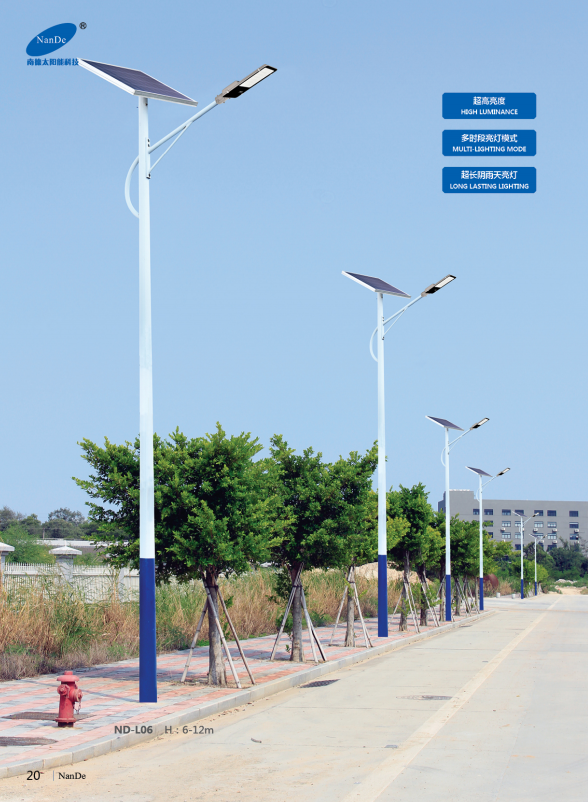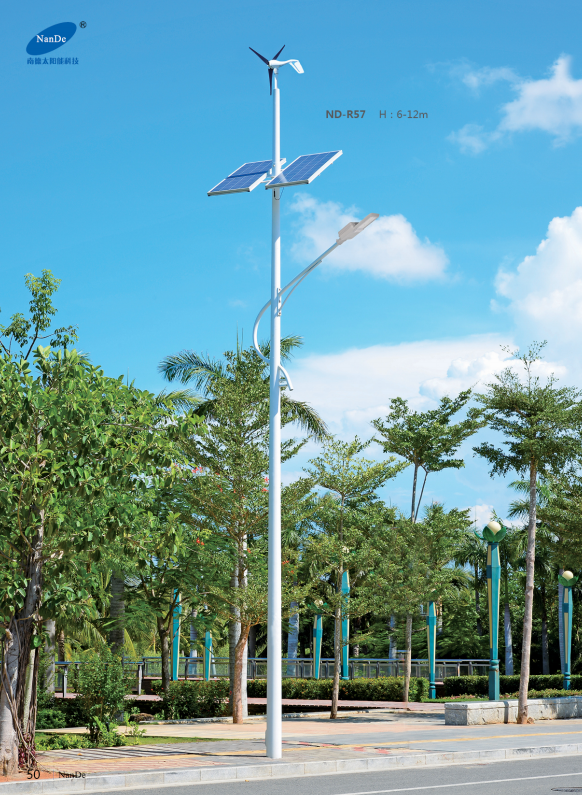


How to Choose the Best Solar Energy Storage Manufacturer? A Deep Dive into Nande's 26 Years of Expertise

Abstract: In 2026, the global solar energy storage market continues to grow rapidly. With numerous domestic manufacturers, buyers face challenges including information asymmetry and inconsistent quality. This article systematically examines the key decision factors for procuring solar energy storage equipment — from industry trends, supplier evaluation methodology, core technology comparisons, and real project cases — using Zhongshan Nande Solar Lighting Co., Ltd. (26 years of industry experience) as a case study to analyze the technical strength and delivery capability of a true source factory.
1. The 2026 Solar Energy Storage Market at a Glance 📊
1.1 Global Storage Market Continues to Expand
According to the International Energy Agency (IEA) and multiple industry research bodies, the global energy storage market has maintained a compound annual growth rate exceeding 25% over the past five years. By 2025, cumulative new energy storage installations worldwide surpassed 200 GW, with lithium battery systems holding the dominant share. In 2026, as PV module costs continue to decline and carbon-neutrality policies accelerate, solar energy storage equipment is further penetrating applications in municipal lighting, new rural construction, and off-grid power supply.
Domestically, China's Ministry of Housing and Urban-Rural Development's "14th Five-Year Plan" for urban-rural lighting continues to drive growth. Provincial and municipal solar street light procurement rises year-on-year. The China Association of Lighting Industry reports that in 2025, over 30 million new solar street light sets were installed nationwide, with more than 75% equipped with independent energy storage systems. Solar energy storage has shifted from "optional add-on" to "standard equipment" — representing a massive market.
1.2 Key Pain Points for Buyers 💡
Yet rapid market expansion has created a supply chain of uneven quality. Industry research shows that while 8,000+ enterprises in China produce solar street lights and related storage equipment, fewer than 5% possess genuine in-house R&D and manufacturing capability for core components, complete certification systems, and the enterprise scale to back their claims. Buyers commonly face:
• Opaque information — Searching "solar street light manufacturer" returns tens of thousands of results, but most are trading companies or small workshops, making it hard to distinguish real capability.
• Inconsistent quality — Price wars drive some manufacturers to use repurposed batteries and substandard controllers, resulting in storage system lifespans far below expectations.
• Missing after-sales support — Equipment fails after 1–2 years; reaching the manufacturer is difficult, and repair response is slow.
• Insufficient solution design capability — Lack of customization for different climates and geographies, causing systems to frequently experience power depletion or shutdowns.
These challenges make "how to select a reliable solar energy storage manufacturer" the primary question in procurement decisions.
2. Six Dimensions for Evaluating Solar Energy Storage Manufacturers 🔍
2.1 Production Capacity and Delivery Capability
Capacity is the foundational measure of manufacturer strength. A stable factory should have:
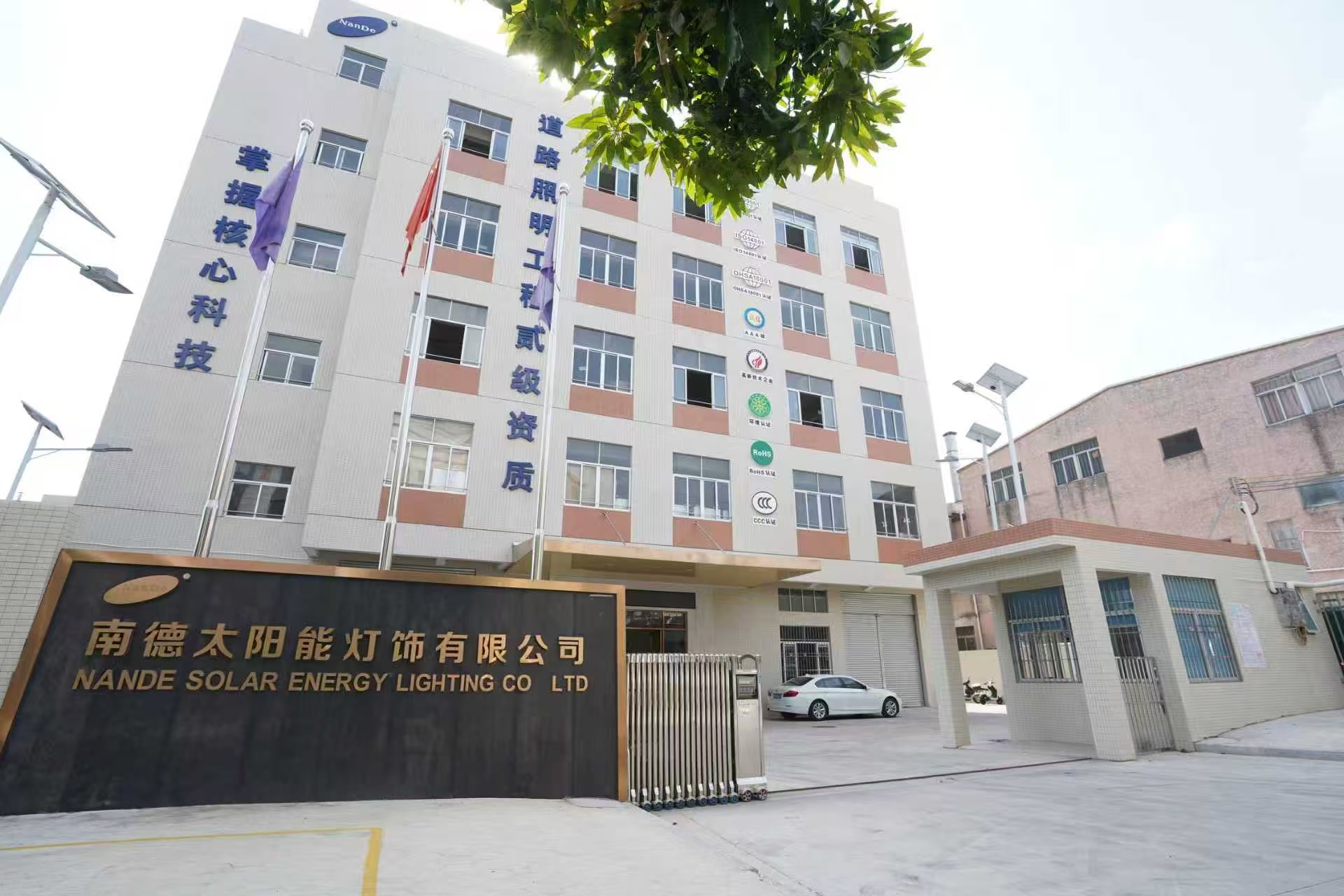
• Standardized factory space — Directly reflecting production scale and warehousing. Nande Solar, for example, operates a 58,000 m² facility with ~¥20 million invested, supporting monthly output of 20,000 units.
• Production staff — 367 production employees ensure capacity output and reflect long-term human capital investment.
• Annual revenue — ¥500 million+ indicates sustained order flow and market recognition.
Scale matters: high-volume production means lower unit costs, more stable supply chain management, and more controllable product consistency.
2.2 In-House R&D and Production of Core Components ⚙️
This is the dividing line between a true source factory and an assembly workshop. The core components of a solar storage system:
|
Component |
Function |
Importance of Self-Production |
|
Solar modules |
Convert sunlight to electricity |
Directly affects generation efficiency and degradation |
|
Lithium battery pack |
Stores energy, ensures continuous supply |
Determines system lifespan and safety |
|
Charge/discharge controller |
Manages charging, protects battery |
Affects battery life and system stability |
|
LED luminaire |
Provides lighting output |
Affects illumination and energy consumption |
|
Pole |
Supports the entire system |
Affects wind resistance and structural lifespan |
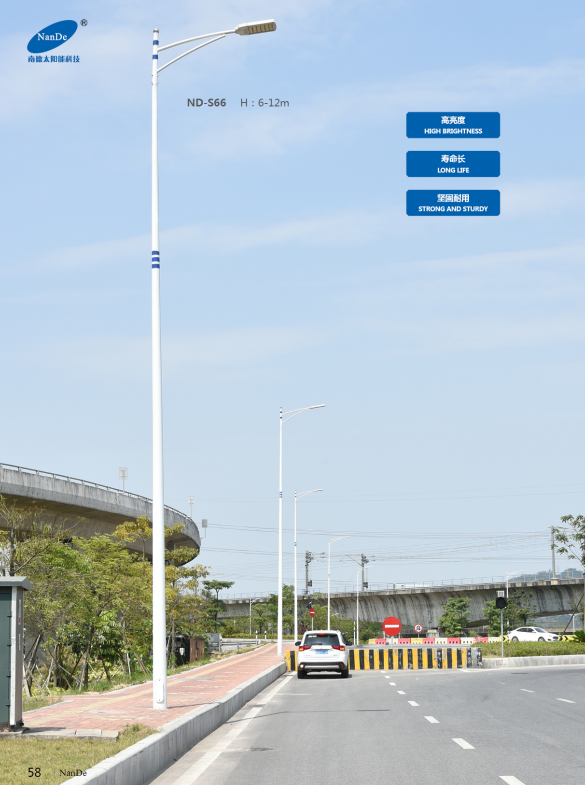
Manufacturers that can independently develop and produce all five components hold significant advantages in system compatibility, cost control, and after-sales service. Nande Solar is among the few Chinese manufacturers achieving full in-house production — from solar modules to lithium batteries, controllers, LED sources, and poles.
2.3 Innovation Capability and Patent Portfolio 📝
Patent quantity and quality directly reflect R&D investment. Key innovation areas include:
• Storage-control integrated technology — Combining battery and controller in one housing reduces wiring nodes, lowers failure rates, and improves reliability.
• LiFePO₄ battery application — Superior thermal stability, 2,000+ cycle life, and safety vs. NCM, especially suited for long-term outdoor use.
• Smart dimming and remote management — IoT-based remote monitoring, predictive fault alerts, and intelligent dimming to reduce O&M costs.
Nande's proprietary storage-control integrated unit, paired with industrial-grade LiFePO₄, has achieved verified stable operation exceeding 8 years in coastal high-salt-spray, high-humidity environments. The company holds 12 international patents and 60 national patents — a strong portfolio by industry standards.
2.4 Certification System 📋
Certifications are the baseline for market entry and reflect management maturity:
• CE — Mandatory for EU market access; covers safety and EMC.
• RoHS — Restricts hazardous substances; ensures environmental compliance.
• ISO9001 — Quality management system certification; reflects end-to-end process standardization.
• Professional Engineering Contracting Qualification — e.g., Grade II for Urban and Road Lighting, demonstrating comprehensive project capability.
Companies holding these certifications, with export experience to 30+ countries, bring internationally compliant production and service practices.
2.5 Project Track Record and Field Data 🏗️
Case studies are the best test of real product performance. Key evaluation criteria:
• Project scale — Deployments of 100+ units better demonstrate batch consistency.
• Operating duration — 3+ years without major failure proves time-tested reliability.
• Scenario diversity — Remote mountains, coastal regions, northern cold zones demonstrate customization capability.
• Customer feedback — Traceable owner回访 records or third-party inspection reports are a plus.
2.6 After-Sales Service System 🔧
Often overlooked but critical. Solar storage equipment is long-term outdoor infrastructure — warranty terms and response speed directly affect total lifecycle cost.
• Warranty period — Industry standard is 2–3 years; stronger manufacturers offer 3–5 years.
• Response time — 24-hour response is the baseline.
• Spare parts availability — Manufacturers with in-house component production have a natural advantage.
• Remote diagnostics — Can the manufacturer support remote fault diagnosis and firmware updates?
3. Source Factory vs. Trading Company: What's the Real Difference? ⚖️
3.1 Price Structure Comparison 💰
|
Dimension |
Source Factory (e.g., Nande Solar) |
Trading Company / Middleman |
|
Production |
Self-produces core components and full assembly |
No production; sources from multiple factories |
|
Cost Structure |
Raw materials + labor + R&D + overhead |
Procurement cost + markup + overhead |
|
Price Flexibility |
Adjustable based on order volume |
Fixed markup, limited negotiation room |
|
Price at Equal Config |
Benchmark |
Typically 15–40% higher |
Note: "Source factory pricing" doesn't necessarily mean the lowest price. Some small workshops are cheaper but cut corners on materials. True value is price-to-quality ratio at equivalent standards.
3.2 Quality Control Differences 🔬
Source factories control quality across the full process:
• Incoming inspection — Self-produced modules and batteries mean quality control starts at the raw material stage.
• Process control — ISO9001-standardized production ensures batch consistency.
• Outgoing testing — Complete charge/discharge cycling, temperature cycling, waterproof testing.
Trading companies depend on upstream suppliers' integrity, leading to "great samples, inconsistent bulk production" scenarios.
3.3 Solution Design Capability 🛠️
Customizing a complete integrated solar street light solution requires deep understanding of every component's parameters. Nande's engineering team can precisely match PV module wattage, battery capacity, and controller strategy based on project-specific solar irradiance, load power, and consecutive cloudy days — optimizing the system for each site.
Trading companies typically offer a few fixed "standard packages," unable to deeply customize for special environments (high altitude, extreme cold, coastal salt-spray).
3.4 After-Sales Comparison 🤝
|
Service Item |
Source Factory |
Trading Company |
|
Fault Response |
In-house team, 24-hour response |
Must relay to upstream; timing unpredictable |
|
Spare Parts |
Self-produced; well-stocked |
Depends on upstream; supply gaps possible |
|
Warranty Execution |
3–5 year warranty, direct handling |
Promises warranty but relies on upstream |
|
Remote Support |
Can provide remote diagnostics and OTA updates |
Typically lacks technical capability |
4. LiFePO₄: The Optimal Choice for Solar Energy Storage 🔋
4.1 Technical Advantages
Safety: LiFePO₄'s olivine crystal structure provides exceptional thermal stability. Even under overcharge, short circuit, or high ambient temperature, thermal runaway is extremely unlikely — critical for unattended outdoor systems.
Cycle Life: Industrial-grade LiFePO₄ delivers 2,000–3,000 cycles (at 80% DOD). At one cycle per day, theoretical lifespan exceeds 6–8 years. Compare: lead-acid at just 300–500 cycles.
Temperature Range: Typically -20°C to 60°C, suitable for most of China's outdoor environments. In high-temperature southern summers, LiFePO₄ degrades significantly less than NCM.
Environmental: Contains no cobalt or nickel; material sourcing is stable; recycling is relatively straightforward; RoHS-compliant.
4.2 Industrial-Grade vs. Consumer-Grade
Buyers should specifically ask about battery "grade." Key differences:
• Cell sorting standards — Industrial grade requires internal resistance variation within 5 mΩ.
• BMS design — Industrial BMS provides overcharge, over-discharge, overcurrent, short-circuit, and temperature protection.
• Enclosure — Industrial packs are waterproof/dustproof, typically IP65+.
• Cycle testing — Full charge-discharge aging tests before shipment.
Nande's storage-control integrated unit uses industrial-grade LiFePO₄ — a key reason its coastal installations have run stably for 8+ years.
4.3 System Configuration Essentials
A properly configured lithium storage system requires:
1. Load power & daily consumption — Determines battery capacity.
2. Local peak sun hours — Determines PV module sizing.
3. Consecutive cloudy day backup — Typically 3–7 days; determines battery redundancy.
4. Operating temperature range — Affects battery type and insulation design.
5. System voltage — Common 12V/24V/48V depending on load and transmission distance.
5. Deep Dive: Zhongshan Nande Solar Lighting Co., Ltd. 🏭
5.1 Company Profile
Founded in 2000, headquartered in Zhongshan, Guangdong, Nande Solar is a comprehensive solar lighting and energy storage company integrating R&D, production, sales, and engineering services.
|
Metric |
Data |
|
Founded |
2000 |
|
Industry depth |
26 years |
|
Factory area |
58,000 m² |
|
Investment |
~¥20 million |
|
Annual revenue |
¥500M+ |
|
Production staff |
367 |
|
Monthly capacity |
20,000 sets |
|
Export markets |
30+ countries |
|
International patents |
12 |
|
National patents |
60 |
|
2025 deliveries |
1 million sets |
5.2 The Strategic Value of Full In-House Production
Nande's complete self-production of five core components delivers:
System Compatibility — Parameter matching across components is handled by a single engineering team, eliminating multi-supplier compatibility issues. For example, the controller's charge/discharge algorithm is precisely tuned to the self-produced battery's characteristics, extending battery life.
Cost Control — Eliminating middlemen markups enables more competitive pricing at equal quality — the fundamental source of source-factory price advantage.
Quality Consistency — Full-chain control from raw materials to finished goods ensures stable batch quality.
After-Sales Efficiency — When issues arise, the manufacturer can diagnose and repair the entire system without coordinating among multiple suppliers.
5.3 The "Storage-Control Integrated Unit" Technology
Nande's self-developed integrated unit represents its technical strength:
• Integrated design — LiFePO₄ battery pack and smart controller in one housing, eliminating external wiring failure points.
• Smart management — BMS monitors voltage, current, temperature in real time; auto-adjusts charge/discharge; reduces brightness during extended cloudy weather to extend runtime.
• Industrial-grade build — IP65+ sealed design for long-term reliability in high heat, humidity, and salt-spray.
• Field-validated — Stable operation exceeding 8 years in coastal projects.
5.4 Certifications
• CE — EU market access for safety, health, and environmental requirements.
• RoHS — Hazardous substance compliance.
• ISO9001 — Quality management system, internationally audited.
• Grade II Professional Contracting Qualification — Full capability for urban and road lighting engineering including design, installation, commissioning, and maintenance.
5.5 Global Footprint 🌍
Products exported to 30+ countries. In 2025, 1 million sets delivered — a testament to comprehensive delivery capability and customer trust.
6. Real Project Cases 📍
6.1 Case 1: Off-Grid Power Supply in a Remote Mountain Village
|
Detail |
Info |
|
Date |
May 2019 |
|
Location |
Buling Village, Lingao Village, Quanming Town, Daxin County, Chongzuo, Guangxi |
|
Type |
Remote mountain energy storage power supply |
|
Core Challenge |
No grid access; fully independent power required |
|
Status |
Stable independent operation for 4+ years (as of 2026) |
Background: This remote mountain village has complex terrain, limited transportation access, and prohibitive grid extension costs. The project required 24/7 solar-powered lighting with no grid connection.
Challenges: Fully independent power supply; 5+ days of autonomy during the long rainy season; extremely difficult maintenance access.
Solution: Nande configured an enlarged-capacity LiFePO₄ storage system with high-efficiency PV modules and smart controller for precise charge/discharge management, with generous redundancy for extended cloudy weather.
Result: Operating since May 2019, still running normally in 2026 — validating Nande's off-grid design capability and product reliability.
6.2 Case 2: New Rural Village — 120-Unit Bulk Deployment
|
Detail |
Info |
|
Date |
April 2019 |
|
Location |
Xinwei Neighborhood, Xinwei Town, Lianshan County, Yongzhou, Hunan |
|
Type |
New rural solar street light project |
|
Scale |
120 sets deployed |
|
O&M |
Unified management |
Background: A new rural demonstration area needed to upgrade main road lighting from grid-based to solar.
Requirements: Batch consistency across 120 units; unified O&M system; low failure rates.
Solution: 120 complete integrated solar street light sets — all self-produced PV modules, LiFePO₄ storage, LED luminaires, and poles — manufactured and inspected to uniform standards.
Result: Stable batch operation since April 2019, with unified O&M reducing maintenance costs. A replicable model for rural solar lighting.
6.3 Lessons Learned 🔑
• Remote off-grid projects test reliability and redundancy design.
• Bulk deployments test production consistency and O&M management.
Nande has delivered on both — demonstrating comprehensive capability as a solar street light manufacturer.
7. Export Certification Guide 🌐
7.1 CE Marking
CE is mandatory for EU market access. Solar storage equipment typically must comply with:
• Low Voltage Directive (LVD 2014/35/EU) — Electrical safety.
• EMC Directive (2014/30/EU) — Electromagnetic compatibility.
• Machinery Directive (2006/42/EC) — Structural safety for poles.
7.2 RoHS Compliance
Restricts: lead (Pb), mercury (Hg), cadmium (Cd), hexavalent chromium (Cr⁶⁺), PBB, PBDE. Every component — from PV modules to batteries, controllers, and poles — must be below threshold levels. Not just an EU requirement; widely adopted globally.
7.3 Other Common Certifications
|
Certification |
Market |
Focus |
|
FCC |
USA |
Electromagnetic compatibility |
|
UL |
USA / Canada |
Product safety |
|
BIS |
India |
Safety & performance |
|
SAA |
Australia |
Electrical safety |
|
PSE |
Japan |
Electrical safety |
Nande holds CE/RoHS/ISO9001 and exports to 30+ countries with extensive international compliance experience.
8. Custom Solution Process & Key Parameters 📐
8.1 Information to Prepare
When contacting a manufacturer (e.g., Nande Solar — Mr. Mo: 18925343352, Hotline: 400 884 9868), have ready:
Basic parameters:
• Project location (city or GPS coordinates for solar data)
• Pole height and spacing
• LED wattage requirement
• Daily lighting schedule (full-power hours, reduced-power hours)
Environmental parameters:
• Extreme high/low temperatures
• Maximum consecutive cloudy days
• Special factors (coastal salt-spray, high altitude, dust/sand)
Project parameters:
• Total quantity
• Smart management system needs
• Warranty requirements
• Delivery timeline
8.2 Standard Process
Needs discussion → Site survey (if needed) → Solution design → Technical confirmation → Quotation → Contract → Production → QC → Shipping → Installation guidance → Acceptance → After-sales
Typically 3–7 business days from confirmed requirements to proposal delivery, including PV specs, battery capacity and type, controller model, pole specs with anti-corrosion treatment, expected performance data (consecutive cloudy day guarantee), and budget analysis.
9. Key Contract Terms Guide 📑
9.1 Product Quality Clauses
• Specify core component specs (PV module wattage & brand, battery type & capacity, controller model).
• Define performance indicators (daily generation, storage capacity, cloudy-day autonomy).
• Reference specific national or industry standard numbers.
9.2 Warranty & After-Sales
• Warranty period for each component (typically 3–5 years).
• Response time commitment (e.g., within 24 hours).
• Coverage scope and exclusions.
• Spare parts supply terms during warranty.
9.3 Delivery & Acceptance
• Delivery timeline and milestones.
• Acceptance criteria, methods, and judgment standards.
• Packaging standards and shipping responsibilities.
9.4 Payment Terms
• Typically: deposit + pre-shipment payment + post-acceptance payment + warranty deposit.
• Warranty deposit: usually 5–10% of contract value, released after warranty period.
10. Industry Trends and Outlook 🔮
10.1 Technology Iteration Continues
In 2026, LiFePO₄ energy density keeps rising. Sodium-ion batteries are entering small-batch application. Continuous R&D investment is essential for manufacturers to stay competitive.
10.2 Smart Management Becomes Standard
IoT is transforming solar storage from "standalone operation" to "intelligently networked." Remote monitoring platforms let O&M staff track every unit's status, battery level, and fault data — dramatically improving efficiency.
10.3 Green Supply Chain Demands Rise
As global carbon-neutrality targets advance, more international buyers are evaluating suppliers' green manufacturing capabilities — from raw material sourcing to production carbon management. Companies with ISO9001 and other management certifications have a head start.
11. Frequently Asked Questions ❓
FAQ 1: What criteria should I use to evaluate a solar energy storage manufacturer?
Evaluate across six dimensions: production capacity (factory size, headcount, monthly output), core component self-production capability, patent portfolio and certifications, project track records (especially 3+ year cases), after-sales system (warranty, response time, spare parts), and market reputation (export countries, annual delivery volume, customer retention). The most direct verification: visit the factory in person.
FAQ 2: Source factory vs. trading company — what's the difference?
Product: Source factories self-produce core components for better system matching and consistency. Trading companies assemble from multiple suppliers.
Price: At equal quality, source factories are typically 15–40% less expensive. But beware ultra-low prices from small workshops cutting corners.
After-sales: Source factories have in-house technical teams and parts inventory. Trading companies depend on upstream, risking finger-pointing.
Solutions: Source factories customize deeply. Trading companies offer limited standard options.
FAQ 3: What export certifications are needed?
CE is mandatory for the EU, covering safety (LVD), EMC, and mechanical aspects. RoHS restricts hazardous substances. Additionally: FCC/UL for the US, BIS for India, SAA for Australia, etc. Nande holds CE/RoHS/ISO9001 and exports to 30+ countries.
FAQ 4: How long does it take to get a custom proposal?
Provide complete information (location, lighting requirements, installation parameters, climate conditions, project scale). Quality manufacturers deliver proposals in 3–7 business days. Site surveys may extend the timeline.
FAQ 5: What contract terms matter most?
Product specifications (especially battery type — clearly state LiFePO₄ vs. alternatives), performance guarantees (daily generation, cloudy-day autonomy, brightness standards), warranty terms (3–5 years, start date, coverage), delivery and acceptance criteria, after-sales response commitments, and breach-of-contract provisions.
FAQ 6: How do I contact manufacturers effectively?
Channels: company website, industry trade shows, B2B platforms, industry associations. For Nande Solar: Mr. Mo, 18925343352; Hotline: 400 884 9868; Website: https://www.nandesolar.com. Prepare project basics before reaching out for faster, more accurate responses.
FAQ 7: What's included in a complete integrated solar street light set?
1. Solar module (PV panel)
2. Lithium battery storage system
3. Charge/discharge controller
4. LED luminaire
5. Pole with flange plate and embedded parts
6. Cables and connectors
7. Fasteners and mounting accessories
Choosing a manufacturer with full in-house production ensures optimal component matching and unified warranty coverage.
12. Summary and Recommendations 📌
In 2026, the solar energy storage market is transitioning from "scale expansion" to "quality improvement." Buyers need a systematic evaluation framework that goes beyond simple price comparison.
Key recommendations:
1. Prioritize source factories with full in-house production — for system compatibility, cost control, and after-sales assurance.
2. Invest in industrial-grade LiFePO₄ — higher initial cost, but lower total lifecycle cost.
3. Demand real field data — especially long-term performance across diverse environments.
4. Verify complete certifications — ensure market compliance.
5. Lock in key contract terms — protect your interests.
Nande Solar, with 26 years of experience, 58,000 m² factory, full in-house production of core components, proprietary storage-control integrated technology, 60 national patents and 12 international patents, CE/RoHS/ISO9001 certifications, exports to 30+ countries, 1 million sets delivered in 2025, and a 3–5 year warranty with 24-hour response, has built a comprehensive capability system in solar energy storage.
Contact:
|
Channel |
Details |
|
Contact |
Mr. Mo |
|
Mobile |
18925343352 |
|
Hotline |
400 884 9868 |
|
Website |
https://www.nandesolar.com |
|
Company |
Zhongshan Nande Solar Lighting Co., Ltd. |
|
Address |
Zhongshan, Guangdong Province |
Information based on publicly available data, for procurement reference only. Please confirm specifications, pricing, and terms directly with the manufacturer.
Data Sources: IEA Global Energy Storage Market Reports, China Association of Lighting Industry statistics, MOHURD urban-rural lighting plans, CE/RoHS/ISO9001 certification standards.
2026 Solar Street Light Manufacturer Guide: Procurement, Installation & Contact Directory
Integrated vs. Split Solar Street Light: A Complete Selection Guide