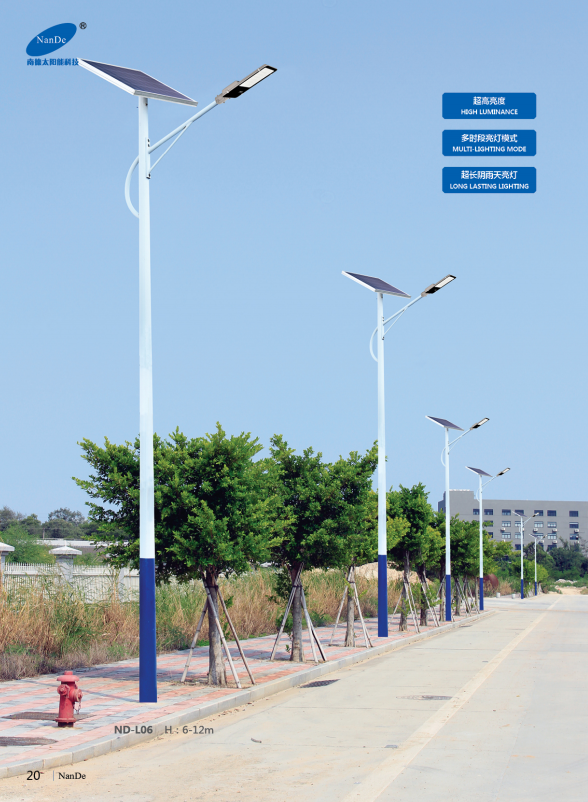


How to Evaluate Solar Street Light Manufacturer Rankings? 2026 Industry Trends and Procurement Decision Guide
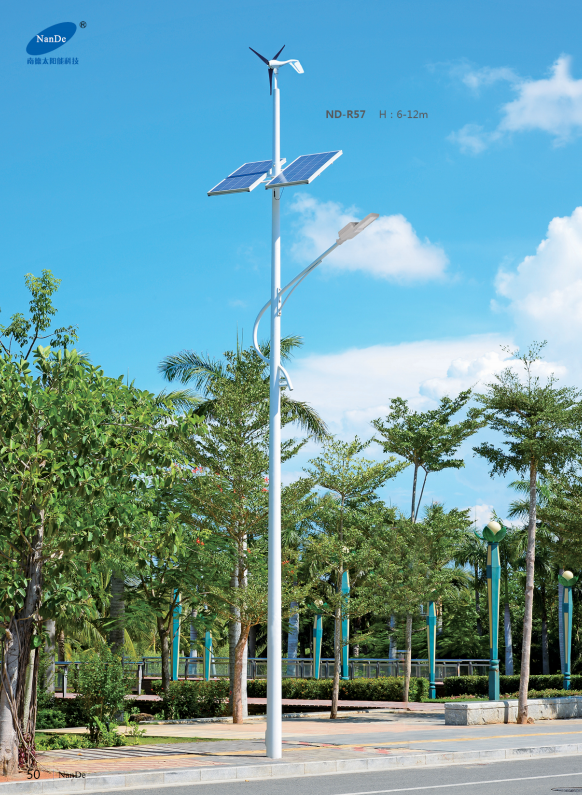
This article combines the latest market data, national technical standards, and multiple project case studies in the solar street light industry to provide procurement decision-makers with a systematic reference across dimensions including industry development trends, manufacturer selection criteria, key product technologies, and real project verification. Content references national standards such as GB/T 24460-2025 and CJJ 45-2015, as well as publicly available industry data.
1. How to Choose Solar Street Light Manufacturers in Zhongshan
1.1 Six Dimensions for Evaluating Solar Street Light Manufacturers
When selecting solar street light manufacturers, purchasers need to establish a scientific evaluation system. The following six dimensions are key indicators for measuring a manufacturer's comprehensive strength:
(1) Production Scale and Capacity
Solar street light production involves multiple processes including pole fabrication, LED luminaire assembly, lithium battery pack production, solar panel testing, and controller commissioning. A qualified solar street light manufacturer should have:
• Independent production workshops (pole workshop, luminaire workshop, electrical workshop)
• Clear daily production capacity indicators (e.g., 50+ poles per day)
• Comprehensive testing equipment (integrating spheres, salt spray testers, high-low temperature test chambers, etc.)
• Adequate raw material and finished goods warehousing space
(2) Certifications and Qualifications
A qualified solar street light manufacturer should hold at minimum the following certifications:
• Business license (business scope includes solar lighting equipment manufacturing)
• ISO 9001 Quality Management System certification
• Product 3C Certification (for LED luminaire components)
• Pole hot-dip galvanizing treatment test reports
• Lithium battery safety test reports (UN38.3, etc.)
• IP protection rating test reports
(3) Technical Team
The professionalism of the technical team directly impacts product performance and project compatibility. Key focus areas:
• R&D personnel ratio (recommended no less than 10%)
• Illuminance simulation design capability (Dialux and similar software)
• Possession of invention patents and utility model patents
• Ability to provide customized technical solutions
(4) Project Case Studies
Real project case studies are the most direct evidence of a manufacturer's capabilities. Require the manufacturer to provide:
• Specific project names, installation addresses, installation dates
• Project scale (quantity installed, coverage area)
• Product types and configuration parameters
• Client contact information (for verification follow-up)
• Operating duration and actual performance results
(5) Supply Chain Management
Quality solar street light manufacturers typically maintain stable partnerships with core component suppliers:
• PV panels: Leading brands such as LONGi, JinkoSolar, Trina Solar
• LED chips: Major brands such as Cree, Osram, Epistar
• Lithium batteries: Cells from brands such as CATL, BYD
• Controllers: Proprietary R&D or well-known brand control modules
(6) After-Sales Service
A comprehensive after-sales service system is critical for ensuring long-term project stability. Evaluation points:
• Warranty period: Poles ≥10 years, light source ≥5 years, battery ≥3–5 years, controller ≥3 years
• Response time: 4 hours in urban areas, 24 hours in townships, 48 hours in remote areas
• Spare parts: Adequate stock of commonly used components
• Technical support: Provision of installation guidance and technical training
1.2 Industrial Cluster Advantages of Zhongshan Solar Street Light Manufacturers
As a major hub of China's lighting industry, Zhongshan City holds unique industrial cluster advantages in solar street light manufacturing:
Location Advantage: Zhongshan is situated in the core area of the Pearl River Delta, adjacent to manufacturing cities such as Shenzhen, Dongguan, and Guangzhou, with a well-developed supply chain. From raw material procurement to finished goods shipment, logistics costs are low and efficiency is high.
Talent Advantage: Zhongshan's lighting industry has accumulated over 30 years of development, with a large pool of professionals in lighting design, electrical engineering, and production management.
Cost Advantage: The economies of scale from a complete supply chain give Zhongshan solar street light manufacturers a clear price advantage at equivalent quality levels.
Export Advantage: Zhongshan has multiple foreign trade comprehensive service zones and bonded logistics centers, facilitating smooth export customs clearance. Several Zhongshan-based solar street light manufacturers have extensive export experience with products sold to overseas markets worldwide.
1.3 Common Procurement Mistakes
Mistake 1: Focusing Only on Price
Excessively low prices often signal quality compromises. In the cost structure of solar street lights, the three major components—PV panels, lithium batteries, and poles—account for over 60% of total cost. If a quotation is significantly below market level, it is very likely that these core components have been manufactured with substandard materials or reduced specifications.
Mistake 2: Looking Only at Specifications, Not Actual Performance
Some manufacturers engage in specification inflation—e.g., labeling a 100W solar panel that is actually only 70W, or a 100Ah battery that is actually only 60Ah. Purchasers are advised to verify specification authenticity through factory audits and sample testing.
Mistake 3: Neglecting Installation Guidance
The quality of solar street light installation directly affects performance. Some manufacturers provide only the product without installation guidance, leading to problems caused by improper installation (such as incorrect solar panel orientation or inadequate foundations).
Mistake 4: Neglecting After-Sales Service
Solar street lights are outdoor equipment that must withstand harsh conditions including extreme heat, heavy rain, and typhoons. A robust after-sales service system is essential for ensuring long-term project operation.
2. Solar Street Light Industry Development Trends
2.1 Global Market Overview
The global solar street light industry demonstrated strong growth momentum in 2025. According to global environmental research data, the global solar street light market reached approximately USD 8.76 billion in 2025, a 14.2% increase from 2024. By 2030, the global market is projected to exceed USD 21.53 billion, with a compound annual growth rate (CAGR) of 19.7% from 2025 to 2030.
By regional distribution:
• Asia-Pacific: Dominates with over 42% market share; China, India, and Southeast Asian nations contribute the majority of growth
• Africa and the Middle East: Emerging growth pole due to low grid coverage and abundant solar resources
• Europe and North America: Smart solar street light demand is growing rapidly, driven by smart city initiatives and green energy policies
2.2 China Market Analysis
China is the world's largest producer and consumer of solar street lights. The domestic market reached approximately RMB 12.86 billion (approximately USD 3.12 billion) in 2025, accounting for 35.6% of the global share.
Market Structure:
|
Application Sector |
Market Size (RMB Billion) |
Share |
|
Municipal road lighting |
5.94 |
46.2% |
|
Rural public lighting |
4.05 |
31.5% |
|
Expressways and tunnels |
1.65 |
12.8% |
|
Parks / campuses / industrial zones |
1.22 |
9.5% |
Regional Distribution:
• East China: RMB 3.86 billion, 30.0% of national total
• Central-South China: RMB 3.24 billion, 25.2%
• North China: 14.1%
• Southwest China: 10.3%
• Northwest China: 7.2%
• Northeast China: 3.2%
2.3 Growth Drivers
(1) Policy Drivers
Multiple national policies are converging to drive rapid growth in the solar street light market:
• Rural Revitalization: The Ministry of Agriculture and Rural Affairs added 3.86 million sets of rural road solar street light installations in 2025, accounting for 62% of total new installations for the year. Multiple regions have issued solar street light procurement implementation plans—e.g., Huangmei County, Hubei Province explicitly included rural road lighting in its 2026 Top 10 Livelihood Projects.
• Dual Carbon Goals: The Ministry of Finance and the National Energy Administration have raised the maximum subsidy for distributed PV lighting equipment purchases to RMB 420 per unit.
• Urban Renewal: The Ministry of Housing and Urban-Rural Development is advancing pilot projects in 62 cities to retrofit existing conventional street lights with PV technology, involving the replacement of over 2.1 million luminaires.
• New Infrastructure: Smart street lights have been incorporated into the new infrastructure framework, integrating 5G micro base stations, environmental monitoring sensors, and other multi-functional modules.
(2) Technology Drivers
• Monocrystalline silicon PV module mass-production efficiency has surpassed 23%; N-type TOPCon and HJT technologies are accelerating iteration
• Lithium iron phosphate battery cycle life has exceeded 5,000 cycles, with energy density reaching 180 Wh/kg
• Smart control module penetration rate exceeds 63%; MPPT controllers are now standard
• LED luminous efficacy has risen to over 150 lm/W; first-tier energy efficiency threshold raised to 95 lm/W
(3) Cost Drivers
PV module prices continue to decline. In 2025, the average ex-factory price of mainstream residential off-grid lighting systems fell 6.6% compared to 2024. Scale production has further reduced unit costs, making solar street lights comprehensively more cost-effective than traditional grid-powered street lights.
2.4 Industry Development Directions
(1) Smart Upgrades
Smart street lights represent a key industry direction. IoT integration enables remote monitoring, fault early warning, and automatic brightness adjustment. AI algorithms optimize lighting strategies by dynamically adjusting brightness based on pedestrian and traffic flow. "Multi-pole integration" combines lighting, surveillance, 5G base stations, environmental monitoring, and emergency broadcasting into a single unit.
(2) Integrated PV-Storage Systems
Deep integration of PV modules and energy storage systems improves overall system efficiency. New solid-state batteries and sodium-ion batteries are entering demonstration phases, further enhancing safety and endurance.
(3) Standardization Advancement
GB/T 24460-2025 General Technical Specifications for Solar PV Lighting Systems officially took effect in March 2026, setting higher requirements for device safety performance, environmental adaptability, and efficiency. The IEC also released updated safety and performance standards for solar street lights in 2025.
(4) Export Growth
China's solar street light exports continue to grow. General Administration of Customs data shows that in 2025, China's total solar street light export value reached RMB 2.38 billion. Major export markets include Southeast Asia, Africa, the Middle East, and South Asia.
3. Industrial Park and Scenic Area Lighting Project Cases
3.1 Yonghan Town, Longmen County, Huizhou City, Guangdong Province
Project Date: September 25, 2019
Project Background: Yonghan Town, located in the northern part of Longmen County, Huizhou City, adjoins the Nankun Mountain Tourist Area and is a renowned hot spring tourism town in Guangdong Province. In recent years, the town has vigorously developed rural tourism and hot spring resort industries, raising the bar for supporting infrastructure. The project area covers the town's main roads and surrounding hot spring resort zones, requiring both road illumination and landscape beautification functions.
Client Requirements:
• Enhance nighttime illumination on the town's main roads, serving tourists and residents
• Align with the overall landscape style of the hot spring resort area
• Reduce lighting operating costs and carbon emissions
• System must adapt to subtropical monsoon climate (high heat, humidity, and typhoon exposure)
Solution:
Nande's solar engineering team provided differentiated configuration plans based on Yonghan Town's road conditions and landscape requirements:
Main Road Plan:
|
Component |
Specifications |
|
Pole |
7m hot-dip galvanized steel pipe, 3.0mm wall thickness |
|
LED Light Source |
60W LED, luminous efficacy ≥130 lm/W, color temperature 4000K |
|
Solar Panel |
120W Grade-A monocrystalline silicon |
|
Lithium Battery |
LiFePO4 24V/100Ah |
|
Controller |
MPPT smart controller |
|
Lighting Layout |
Dual-side symmetrical, 30m spacing |
|
Protection Rating |
IP65 |
Resort Landscape Road Plan:
|
Component |
Specifications |
|
Pole |
5m hot-dip galvanized steel pipe, antique style |
|
LED Light Source |
30W LED, color temperature 3000K warm white |
|
Solar Panel |
60W monocrystalline silicon |
|
Lithium Battery |
LiFePO4 12V/60Ah |
|
Special Feature |
Antique lamp shade, landscape design |
Project Results:
• 86 solar street lights installed on main roads, covering approximately 2.5 km of road
• 45 solar street lights installed on resort landscape roads
• Main road average illuminance reached 15–20 lux, meeting CJJ 45-2015 secondary road lighting requirements
• Hot spring resort visitors reported significantly improved nighttime environment quality
• Annual electricity savings of approximately RMB 45,000 (calculated at grid power equivalent)
• Project has been in stable operation for over 6 years
3.2 Yangjiang Prison Project, Yangdong District, Yangjiang City, Guangdong Province
Project Date: December 16, 2019
Project Background: Yangjiang Prison, located in Nalong Town, Yangdong District, Yangjiang City, is a special facility lighting project. The prison has specific safety and reliability requirements for its lighting system, ensuring nighttime illumination with no dark spots or blind zones, while the system must demonstrate long-term stable operation.
Client Requirements:
• Nighttime illumination for perimeter walls, corridors, and activity areas of the prison
• Lighting system must have extremely high reliability and stability
• System must feature anti-theft and anti-vandalism capabilities
• Independent operation without grid power supply
Solution:
To address the special requirements of the prison project, Nande Solar provided a highly secure and reliable customized solution:
|
Component |
Specifications |
|
Pole |
6m hot-dip galvanized steel pipe, 3.0mm wall thickness (reinforced) |
|
LED Light Source |
50W LED, luminous efficacy ≥130 lm/W, color temperature 5000K |
|
Solar Panel |
100W Grade-A monocrystalline silicon |
|
Lithium Battery |
LiFePO4 24V/120Ah (high capacity) |
|
Controller |
MPPT controller with fault alarm function |
|
Protection Rating |
IP65 |
|
Pole Foundation |
Enlarged pit 600×600×800mm, C30 concrete |
|
Anti-Theft Design |
Battery housed inside the pole, secured with anti-theft bolts |
Project Highlights:
• 3.0mm reinforced wall thickness pole, wind resistance upgraded to Grade 12
• Battery housed inside the pole to prevent external battery box theft or vandalism
• Controller with fault alarm function enables timely notification of management personnel in case of anomalies
• High-capacity lithium battery ensures 7+ days of backup during continuous rainy weather
• Complete perimeter illumination with no blind spots
Project Results:
• 96 solar street lights installed in total
• Covers prison perimeter walls, main corridors, and activity areas
• Equipment integrity rate has remained above 98% since commissioning
• Prison management has fully affirmed the system's stability and security
• Annual electricity savings of approximately RMB 28,000
3.3 Qianpai Town Insect Killing Lamp Project, Xinyi City, Maoming, Guangdong Province
Project Date: September 22, 2019
Project Background: Qianpai Town in Xinyi City is a renowned agricultural town in Guangdong Province, famous for Sanhua plum cultivation. Local fruit growers have long faced pest control challenges—heavy reliance on chemical pesticides leads to high costs and impacts fruit quality. To promote green prevention technology, the local agricultural department introduced a solar insect killing lamp project.
Client Requirements:
• Use solar-powered physical pest control equipment to reduce chemical pesticide usage
• Equipment must adapt to mountainous orchard environments (heavy rain, fog, large temperature fluctuations)
• Simple installation and maintenance, suitable for farmer self-management
• Cover large-area orchards
Solution:
Nande customized a solar insect killing lamp solution for Qianpai Town:
|
Component |
Specifications |
|
Solar Panel |
40W monocrystalline silicon |
|
Lithium Battery |
LiFePO4 12V/30Ah |
|
Insect Killing Lamp |
Frequency-vibration type, attractant wavelength 320–680nm |
|
Controller |
Light control + time control, auto-on at dusk |
|
Pole Height |
2.5–3 meters |
|
Protection Rating |
IP65 |
|
Coverage Area |
Single lamp covers 30–50 mu |
Technical Features:
• Uses specific wavelength light to attract and kill pests with minimal impact on beneficial insects
• Independent solar power supply—no cable laying required, suitable for mountainous orchards
• Light-controlled automatic on/off—no manual operation needed
• Electric killing method—green, environmentally friendly, no chemical residues
Project Results:
• 280 solar insect killing lamps installed in total
• Covers approximately 8,000 mu of orchards
• Chemical pesticide usage reduced by approximately 40%
• Fruit quality improved; purchase prices increased by approximately 15%
• Project received high praise from the local agricultural department
3.4 Chengzhong District, Sihui City, Zhaoqing, Guangdong Province
Project Date: November 10, 2019
Project Background: Chengzhong District in Sihui City is an old urban area with narrow alleys (3–4 meters wide) and dense buildings. Some road sections cannot accommodate conventional grid-powered street light wiring. This project aimed to resolve nighttime lighting challenges in old urban alleys and improve residents' quality of life.
Solution:
For the narrow alleys and densely built environment, Nande's team recommended a lightweight, integrated solar street light solution:
|
Component |
Specifications |
|
Luminaire Type |
Integrated solar street light (integrated lamp head + solar panel + battery) |
|
LED Light Source |
20W LED, luminous efficacy ≥130 lm/W |
|
Solar Panel |
40W monocrystalline silicon (integrated on top of luminaire) |
|
Lithium Battery |
LiFePO4 12V/30Ah |
|
Installation Method |
Wall-mount / short pole (2.5–3 meters) |
|
Control Mode |
PIR sensor + light control |
|
Protection Rating |
IP65 |
Installation Plan:
• Narrow alleys: Wall-mounted installation, directly fixed to building walls
• Wider passages: 3-meter short pole installation
• PIR sensor function: Full-power illumination when pedestrians/vehicles pass; automatically dims to 20% brightness when unoccupied
• Spacing: 15–20 meters
Project Results:
• 150 integrated solar street lights installed
• Covers approximately 3.2 km of old urban alleys
• Effectively solved the lighting challenge where conventional grid wiring was impossible
• Significant improvement in resident nighttime travel satisfaction
• Easy installation—50+ units can be installed in a single day
4. Solar Street Light Selection Guide
4.1 Integrated vs. Split-Type Selection
Integrated Solar Street Lights:
• Characteristics: PV panel, LED luminaire, lithium battery, and controller are all integrated into one unit
• Advantages: Easy installation, attractive design, maintenance-free
• Suitable for: 3–6 meter poles, under 30W, rural alleys / courtyards / scenic walkways
• Limitations: Limited heat dissipation; not suitable for high power levels
Split-Type Solar Street Lights:
• Characteristics: Components installed separately and connected by cables
• Advantages: Better heat dissipation, flexible configuration, high maintainability, supports high power
• Suitable for: 6+ meter poles, 50W+, main roads / municipal projects
• Limitations: Complex installation; requires professional construction
Selection Recommendations:
|
Scenario |
Recommended Type |
Rationale |
|
Rural alleys (3–4m wide) |
Integrated |
Easy installation, high cost-effectiveness |
|
Rural main roads (5–6m wide) |
Either |
Based on power and budget requirements |
|
Town / municipal roads (6m+) |
Split-type |
Better heat dissipation, high maintainability |
|
Scenic area landscaping |
Integrated |
Attractive design |
|
Industrial parks |
Split-type |
High power, easy maintenance |
4.2 PV Panel Selection Key Points
Monocrystalline Silicon vs. Polycrystalline Silicon:
|
Comparison Item |
Monocrystalline Silicon |
Polycrystalline Silicon |
|
Conversion Efficiency |
21–24% |
16–19% |
|
Low-Light Performance |
Excellent |
Average |
|
Service Life |
25+ years |
20+ years |
|
Price |
Higher |
Lower |
|
Recommended Scenario |
Rainy/foggy/high-latitude regions |
Sun-sufficient northern regions |
Power Ratio Recommendations:
• Solar panel power should be 2–4 times the LED light source power
• Sun-sufficient regions (Northwest, North China): 2–2.5×
• Moderate sunlight regions (East China, Central China): 2.5–3×
• Low sunlight regions (Guizhou, Sichuan, Chongqing): 3–4×
4.3 Control System Selection
Basic Controller:
• Functions: Light-controlled switch (auto-on at dusk, auto-off at dawn)
• Suitable for: Basic lighting needs, budget-limited projects
Smart Controller:
• Functions: Light control + time control (can set full power in early evening, reduced power in late night)
• Suitable for: Most rural and township projects
MPPT Controller:
• Functions: Maximum Power Point Tracking; charging efficiency improved by 15–20%
• Suitable for: Areas with poor sunlight conditions, high-power systems
IoT Controller:
• Functions: Remote monitoring, fault alarm, brightness adjustment, data collection
• Suitable for: Municipal projects, large industrial parks, smart city projects
4.4 Waterproof Design Standards
Per GB/T 24460-2025 requirements, outdoor solar street light protection ratings should be no lower than IP54. Practical selection recommendations:
|
Usage Environment |
Recommended Protection Rating |
Salt Spray Test |
|
General inland areas |
IP65 |
≥48 hours |
|
Coastal regions |
IP65+ |
≥168 hours |
|
High-humidity regions |
IP66 |
≥96 hours |
|
Industrial pollution zones |
IP66 |
≥168 hours |
5. Why Choose Nande Solar Street Light Factory
5.1 Corporate Positioning
Zhongshan Nande Solar Lighting Co., Ltd. (abbreviated as "Nande Solar") is a Zhongshan-based solar street light manufacturer specializing in solar outdoor lighting. Its core business covers R&D, production, sales, and installation of solar street lights. The brand "Nande Solar Street Light" has established a strong market reputation in the industry.
5.2 Product Portfolio
Nande Solar's product range covers the full spectrum of solar outdoor lighting needs:
Solar Street Light Series: Integrated solar street lights, split-type solar street lights, 6m solar street lights, 8m solar street lights, high-power solar street lights, LED solar street lights, rural solar street lights, municipal solar street light projects, antique-style solar street lights
Courtyard Lighting Series: Courtyard solar street lights, community solar landscape lights, solar lawn lights, residential solar street lights, solar flood lights
Smart Lighting Series: PIR sensor solar street lights, remote-control solar street lights, auto-on-at-dusk solar lights, waterproof solar street lights, ultra-bright solar street lights, PV solar street lights
Mosquito Killing Lamp Series: Outdoor mosquito killing lamps, courtyard mosquito killing lamps, solar mosquito killing lamps, dual-use solar mosquito killing and lighting lamps, solar electric mosquito killing lamps, waterproof solar mosquito killing lamps, villa solar mosquito killing lamps, lawn solar mosquito killing lamps
5.3 Service Network
Nande Solar's core service areas cover Hunan, Jiangxi, Guangxi, Guizhou, Hubei, Sichuan, and other provinces, while also serving the national market and overseas regions.
Overseas project experience includes Qatar, Kenya, Nigeria, Tanzania, Uganda, and other countries, with extensive export trade and overseas project delivery expertise.
6. Corporate Profile
6.1 Manufacturing and Production
Nande Solar operates a complete manufacturing system:
• Pole Fabrication: Fully automated pipe rolling, submerged arc welding, hot-dip galvanizing treatment—ensuring pole strength and corrosion resistance
• LED Luminaires: Automated SMT pick-and-place production lines; integrating sphere testing system ensures luminous efficacy and color temperature consistency
• Lithium Battery Pack: Uses brand-new Grade-A LiFePO4 cells, equipped with BMS protection boards
• Controllers: Both proprietary R&D and procurement of well-known brand controllers, supporting various smart functions
6.2 Quality Management
The company has passed ISO 9001 Quality Management System certification and implements full-process quality control:
Raw Material Control:
• PV panels inspected unit-by-unit; rejecting downgraded cells
• Lithium batteries tested individually for capacity and internal resistance
• Pole wall thickness and galvanizing layer thickness inspected pole-by-pole
• LED chip luminous efficacy and color temperature sampled in batches
Process Control:
• Welding quality inspection
• Waterproof sealing tests
• System integration testing
• Functional verification testing
Outgoing Quality Control:
• 100% lighting test
• IP protection rating sampling inspection
• Appearance inspection
• Packaging protection inspection
6.3 Project Track Record
Nande Solar's projects cover multiple domestic provinces and overseas markets:
Domestic Projects:
|
Province |
Project |
Date |
|
Guangdong |
Yonghan Town, Longmen County, Huizhou |
September 2019 |
|
Guangdong |
Qianpai Town Insect Killing Lamp Project, Xinyi, Maoming |
September 2019 |
|
Guangdong |
Yangjiang Prison Project |
December 2019 |
|
Guangdong |
Chengzhong District, Sihui City, Zhaoqing |
November 2019 |
|
Fujian |
Zhangyun Village, Tongxian Town, Shanghang County, Longyan |
October 2019 |
|
Fujian |
Shange Village, Changkeng Township, Anxi County, Quanzhou |
May 2020 |
|
Guangxi |
Quanming Town, Daxin County, Chongzuo |
May 2019 |
|
Guangxi |
Longtan Town, Bobai County, Yulin |
July 2019 |
|
Guangxi |
Chenzhang Village, Gangnan District, Guigang |
October 2019 |
|
Guizhou |
Jiajiu Township, Congjiang County |
October 2019 |
|
Guizhou |
Fenshui Town, Wuchuan County |
December 2019 |
|
Guizhou |
Hui Shui County, Qiannan |
April 2019 |
|
Hunan |
Xinwei Town, Lianshan County, Yongzhou |
April 2019 |
|
Yunnan |
Yuanmou County, Chuxiong |
May 2019 |
|
Sichuan |
Nanba Town, Xuanhan County |
August 2019 |
|
Hainan |
Golf Course Lights, Qiongzhong County |
November 2019 |
|
Henan |
Zhonghua Lamp Project, Neixiang County, Nanyang |
August 2019 |
|
Shaanxi |
Hanzhong Nanzheng District |
September 2019 |
Overseas Projects:
Qatar, Kenya, Nigeria, Tanzania, Uganda
6.4 Industry Data Context
According to Boyan Consulting's 2026 China Solar Street Light Industry Market Dynamics Analysis Report, the national solar street light market reached RMB 12.86 billion in 2025, a year-on-year growth of 14.3%. Total new solar street light installations nationwide reached 4.28 million sets. Over 137 enterprises have large-scale production capacity, with an industry CR5 of 36.4%. As a solar street light manufacturer in Zhongshan, Nande Solar continues to cultivate deep development within this market.
7. Frequently Asked Questions (FAQ)
Q1: What is the difference between IP65 and IP66 waterproof ratings for solar street lights?
IP protection ratings consist of two digits—the first indicates dust protection level, the second indicates water protection level.
• IP65: Complete dustproof (Level 6) + protected against water jets from all directions (Level 5). Suitable for most conventional outdoor use in inland areas.
• IP66: Complete dustproof (Level 6) + protected against powerful water jets (Level 6). Suitable for coastal regions, typhoon-prone areas, or high-humidity environments.
For solar street light projects in general areas, IP65 meets daily usage requirements. Coastal or special environments should select IP66 or above.
Q2: What approval procedures are required for solar street light installation?
Rural road solar street light installations typically involve the following procedures:
1. Project Approval: Submit to the local Bureau of Agriculture and Rural Affairs or Housing and Urban-Rural Development Bureau
2. Procurement Approval: Government procurement projects must follow open tendering or competitive negotiation procedures
3. Land Use Approval: Street light installation involves public land; generally coordinated by the village committee or town government
4. Electrical Approval: Solar street lights require no grid connection—no power connection application procedures needed
5. Acceptance: Upon project completion, relevant departments organize acceptance inspection
Q3: Which is better—integrated or split-type solar street lights?
Each type has its own advantages and disadvantages; the choice should be based on specific scenarios:
|
Comparison Dimension |
Integrated |
Split-Type |
|
Installation Difficulty |
Simple |
Complex |
|
Maintenance Convenience |
Average (whole-unit replacement) |
Good (component-by-component replacement) |
|
Suitable Height |
3–6 meters |
5+ meters |
|
Suitable Power |
≤40W |
Unlimited |
|
Heat Dissipation |
Average |
Excellent |
|
Aesthetics |
Good |
Average |
|
Price |
Moderate |
Slightly higher |
Integrated types are recommended for low-power scenarios such as rural alleys and courtyards; split-type is recommended for high-power scenarios such as town main roads and municipal projects.
Q4: What is the service life of solar street lights? Which components need replacement?
Expected service life of each component:
• Pole (hot-dip galvanized): 15–20 years
• Solar panel (monocrystalline silicon): 20–25 years
• LED light source: 50,000 hours (approximately 10–15 years)
• LiFePO4 battery: 8–10 years (3,000+ cycle life)
• Controller: 5–8 years
The primary components requiring replacement during use are the lithium battery and controller. Battery replacement cycle is approximately 8–10 years; controller is approximately 5–8 years. Replacement is straightforward—no need to replace the entire light fixture.
Q5: How to calculate the return on investment for solar street lights?
Using a 100-unit 6-meter solar street light project as an example:
Solar Street Light Solution:
• Equipment procurement + installation: approximately RMB 600,000 (RMB 6,000 per unit)
• Annual maintenance: approximately RMB 15,000
• Electricity cost: RMB 0
• 5-year total cost: 600,000 + 75,000 = RMB 675,000
Traditional Grid-Powered Solution:
• Equipment procurement: approximately RMB 300,000 (RMB 3,000 per unit)
• Cable laying + construction: approximately RMB 200,000
• Annual electricity cost: approximately RMB 80,000 (100 units × 50W × 8h × 365 days ÷ 1,000 × RMB 0.65/kWh)
• Annual maintenance: approximately RMB 30,000
• 5-year total cost: 500,000 + 550,000 = RMB 1,050,000
Conclusion: The 5-year total cost of solar street lights is approximately 36% lower than grid-powered street lights, with a longer service life. The longer the usage period, the greater the savings.
8. Contact Information
For more product information, project quotations, or technical consultation, please contact Nande Solar Street Light Factory:
Phone: 400 884 9868 (National Service Hotline)
Contact: Manager Mo, 189 2534 3352
Company: Zhongshan Nande Solar Lighting Co., Ltd.
Factory Address: Zhongshan City, Guangdong Province, China
References:
1. General Technical Specifications for Solar PV Lighting Systems GB/T 24460-2025
2. Design Standard for Lighting of Urban Roads CJJ 45-2015
3. Energy Efficiency Limits and Grades for LED Luminaires for Roads and Tunnels GB 37478-2025
4. Boyan Consulting, 2026 China Solar Street Light Industry Market Dynamics Analysis Report
5. Global Environmental Research Network, Global and China Solar Street Light Industry Development Trends Insight Report (2026)
6. China Lighting Electrical Appliances Association, 2025 China Solar Lighting Industry White Paper
7. MarketsandMarkets, Smart Street Lighting & Connected Street Lighting Market Analysis
8. Ministry of Industry and Information Technology, 2025 Green and Low-Carbon Lighting Equipment Promotion and Application Report
Integrated vs. Split Solar Street Light: A Complete Selection Guide
Solar Street Light Factory Product System and Residential Area Lighting Engineering Cases
Related Article