

A ‘Guide to Avoiding Pitfalls’ for Common Solar Street Light Issues: How Can Regular Maintenance Prevent Problems at Source?
author: Jacob K
2026-06-26
As the concept of green and low-carbon living becomes increasingly widespread, solar street lights—thanks to their energy efficiency, environmental friendliness and ease of installation—are being widely used on urban and rural roads, in industrial estates and in the development of ‘Beautiful Villages’. However, in practical use, many users have reported issues such as reduced brightness, shorter battery life and even lights that fail to illuminate altogether. Drawing on first-hand engineering experience, this article outlines the four most common causes of faults in solar street lights and provides a scientifically sound regular maintenance plan to help you ‘prevent problems before they arise’ at their source.

I. The Four Most Common ‘Recurring Problems’ with Solar Street Lights
1. Battery Ageing and Depletion
This is the most common issue. After 2–3 years of charge-discharge cycles, the capacity of lead-acid or lithium batteries naturally declines; if they remain in a state of undercharge for an extended period (such as during prolonged periods of overcast or rainy weather), severe undercharging can lead to increased internal resistance, ultimately rendering the battery unable to store electricity.
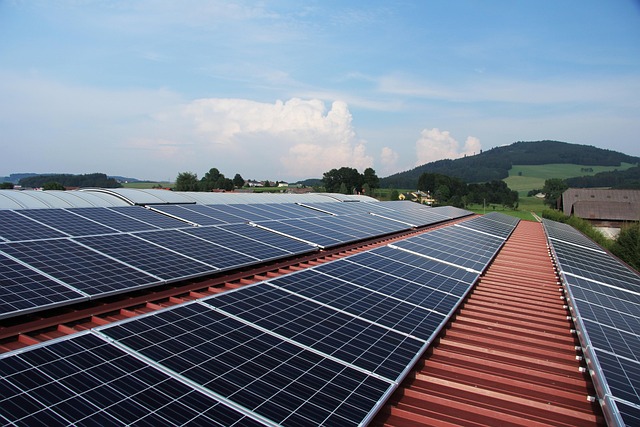
2. Dust Accumulation or Obstruction of Photovoltaic Panels
The accumulation of dust, bird droppings or fallen leaves on the surface of photovoltaic panels can significantly reduce photovoltaic conversion efficiency. Data shows that if dust accumulates for more than a month, power generation may drop by 20–40 per cent, directly resulting in shorter night-time lighting periods.
3. Faulty or Incorrectly Configured Controller
The controller acts as the ‘brain’ of the system. Lightning strikes, overloads or incorrect parameter settings (such as excessive load power or abnormal charging voltage) can cause the controller to fail, leading to over-discharge of the battery or flickering lights.
4. Poor wiring connections and LED lumen depreciation
Oxidised or loose terminal blocks, as well as ageing waterproof seals that allow water ingress, can easily cause short circuits or open circuits. At the same time, LED chips operating at high temperatures for extended periods will experience lumen depreciation, resulting in a gradual decline in illuminance year on year.
II. How can regular maintenance be tailored to address specific issues?
-
Monthly Basic Inspection
Clean the photovoltaic panels: Wipe the panels with a soft cloth or clean water to remove dust and debris; increase the frequency of checks, particularly during dry and windy seasons.
Inspect the exterior: Check the luminaire casing for damage and the mounting brackets for rust, and tighten any loose screws promptly.
-
Quarterly Focused Maintenance
Check battery condition: Use a multimeter to measure the terminal voltage of the batteries to determine whether there is any over-discharge or swelling. For lithium-ion battery packs, it is recommended to carry out equalisation charging once a quarter.
Test controller functionality: Simulate switching between day and night modes to confirm that the controller can switch the load on and off normally, and verify that the protection parameters match the system.
-
Annual In-Depth Maintenance
Replace Wear-and-Tear Parts: Plan battery pack replacements in advance based on the battery life cycle (typically 3–5 years) to avoid sudden power cuts affecting night-time travel safety.
Check Cable Sealing: Inspect the waterproofing of all connectors; reapply silicone sealant or replace aged waterproof O-rings to prevent water ingress during the rainy season.
Luminous Flux Decay Assessment: Use a lux meter to compare against initial installation data; if luminous flux decay exceeds 30 per cent, consider replacing the LED modules.
III. Three Practical Recommendations for Management Bodies
Establish equipment records: Document the installation date, battery model, controller version and maintenance history for each streetlight to facilitate tracing the root cause of any issues.
Install smart monitoring: Where conditions permit, projects should be equipped with an IoT remote management system to monitor voltage, current and fault alerts in real time, thereby shifting from a ‘reactive repair’ approach to ‘proactive early warning’.
Use Genuine Components: Avoid using non-standard batteries or substandard controllers simply to save money; long-term maintenance costs are often far higher than the initial investment in quality.
The reliability of solar street lights depends not only on the quality of the product itself, but also on scientific and sustained operation and maintenance management. Through a three-tier maintenance system comprising ‘monthly cleaning, quarterly inspections and annual in-depth servicing’, the incidence of common faults can be reduced by more than 80 per cent, ensuring that green lighting truly ‘shines brightly and never goes out’.
If you are planning a new solar street light project or have any queries regarding the upgrade or refurbishment of your existing system, please feel free to contact us for a bespoke solution.
How to Spot Signs of Wear and Tear in Solar Street Lights at an Early Stage
Related Article