

Why is it so important to choose high-quality solar street light components?
author: Jacob K
2026-05-28
With the advancement of global green energy policies, solar street lights have become the mainstream choice for municipal construction, rural revitalisation, and lighting in industrial parks and remote areas. However, in practical projects, the question ‘Why is it essential to choose high-quality solar street light components?’ remains a key concern for many purchasers and management bodies.
On the surface, low-cost solar street lights may seem more attractive; however, from a full lifecycle perspective, the quality of the components directly determines lighting performance, service life, operational and maintenance costs, and even the success or failure of the project.

I. Photovoltaic Modules: Power Generation Efficiency Is Key
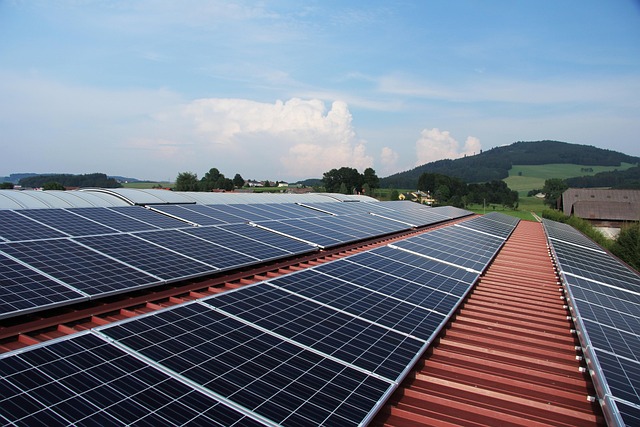
High-quality modules utilise Grade A monocrystalline or polycrystalline wafers, offering high photovoltaic conversion efficiency, excellent low-light response and low degradation rates; whereas inferior panels often use recycled wafers or Grade B materials. Whilst their initial brightness may be acceptable, power generation drops significantly after six months, resulting in shorter illumination times at night and failure to operate normally during overcast or rainy weather.
II. Energy Storage System: Lithium Battery Quality = System Lifespan
The battery is the component most likely to be the ‘weak link’ in a solar streetlight system. High-quality lithium iron phosphate (LiFePO₄) batteries offer: stable deep-cycle performance, superior high- and low-temperature adaptability, and a cycle life of over 2,000 cycles; whereas cheap products often use refurbished cells or inferior ternary lithium batteries, which are highly prone to swelling, leakage, and a sharp drop in capacity, and may even pose safety hazards.
III. LED Light Source and Optical Design: Determining Luminous Efficiency and Visual Comfort
High-quality LED chips paired with professional optical lenses can achieve: high luminous efficacy (≥150 lm/W), uniform light distribution, reduced glare, and appropriate colour temperature, avoiding ‘gloomy white light’ and ‘blue light pollution’. In contrast, inferior luminaires commonly suffer from rapid light decay, uneven illumination and visual fatigue, all of which compromise road safety.
IV. Controllers and Protection Ratings: The Invisible ‘Gatekeepers’
Intelligent controllers determine charging and discharging strategies, energy-saving modes and fault protection.
High-quality controllers feature multiple safeguards against overcharging, over-discharging, short circuits and lightning strikes. Combined with an IP65 or higher protection rating, they can withstand complex environments such as torrential rain, dust and extreme cold.
V. Total Cost: High Quality ≠ High Total Cost
The unit price at the procurement stage is merely the tip of the iceberg. Total Cost of Ownership (TCO) is the key factor: High-quality systems: 5–8 years of maintenance-free operation with stable brightness. Low-quality systems: Frequent repairs every 1–2 years, with labour and spare parts costs far exceeding the initial price difference.
For long-term projects such as government works, rural revitalisation initiatives and industrial parks, investing in high-quality components upfront represents the most cost-effective decision.
Opting for high-quality solar streetlight components involves making a reasonable one-off investment to secure years of maintenance-free, stable illumination, thereby avoiding higher costs associated with repairs and replacements.
Key maintenance tips for keeping solar street lights running efficiently
Real User Experience of Nande Solar Home Portable Power Station