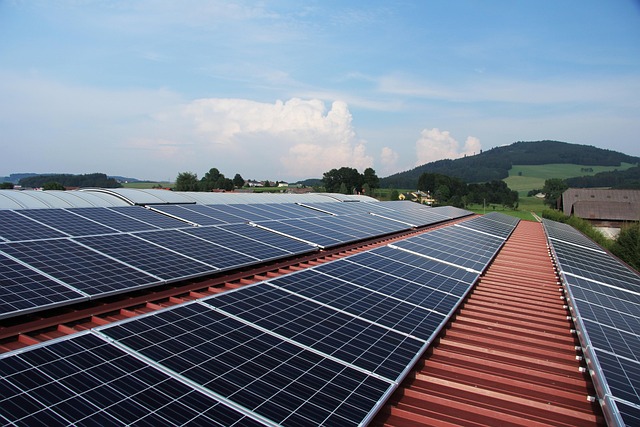


Photovoltaics Illuminate the Future: How Solar Technology is Accelerating the Achievement of 2026 Climate Goal
author: Jacob K
2026-02-08
As global average temperatures break records month after month and climate action enters a countdown phase, an energy revolution centered on solar technology is accelerating.
1. Strategic Alignment: Solar Technology Resonates with Global Climate Goals
-
Solar technology shares a natural strategic alignment with global climate objectives. According to a 2025 study in Nature Communications, achieving the Paris Agreement's goal of limiting global warming to 1.5 or 2°C requires energy systems to reach net-zero carbon emissions between 2040 and 2070 at the latest.
-
Photovoltaic (PV) and wind power are becoming central pillars of this transition, with solar energy playing a pivotal role due to its widespread availability and continuously declining costs.
-
The latest report from the International Energy Agency's Photovoltaic Power Systems Program indicates that global PV deployment is accelerating, driven primarily by falling costs, technological advancements, and urgent climate targets. The emission reduction benefits of solar technology have been scientifically validated.
-
A 2025 study by Harvard University's Sarata Institute found that every 15% increase in U.S. solar power generation reduces annual carbon dioxide emissions by approximately 8.5 million metric tons. This reduction equates to 12% of the U.S. Environmental Protection Agency's 2042 emissions reduction target.
-
Notably, the emission reduction impact of solar deployment exhibits significant regional variation. Sun-drenched states like California, Texas, and Florida demonstrate the most pronounced emission savings from solar power generation.
2. Technological Breakthroughs: PV Innovations for Harsh Climates
-
As photovoltaic applications expand into increasingly demanding environments, traditional modules face unprecedented challenges in weather resistance, stability, and power generation efficiency. Today, technological innovations are overcoming environmental constraints, enabling PV systems to operate efficiently under extreme climatic conditions.
-
In desert and Gobi regions, PV modules endure year-round sand and dust coverage, causing power generation losses exceeding 30%. Partial shading frequently creates hot spots. Additionally, ultraviolet radiation intensity in these areas is 2-3 times higher than average, coupled with extreme diurnal temperature fluctuations that subject modules to frequent thermal expansion and contraction.
-
To address these challenges, the industry has developed specialized solutions for harsh environments. For instance, nanoscale self-cleaning coatings provide triple protection: reducing dust adhesion, preventing sediment buildup, and facilitating easy cleaning.
-
In cold, snowy regions, PV systems face entirely different challenges. While low temperatures can boost module efficiency and slow material degradation, they may also trigger additional physical and thermomechanical deterioration.
-
The IEA-PVPS report recommends high-tilt systems with ample ground clearance and protective fencing under snowy conditions to minimize losses. Components optimized for cold climates require thicker glass, microcrack-tolerant cells, specialized encapsulants, and frames.
-
In tropical humid climates, PV systems must withstand corrosion and component degradation caused by persistent high temperatures and humidity. High humidity also increases dust adhesion and biological growth. Components designed for tropical regions require moisture-resistant encapsulants, corrosion-resistant frames, and UV-resistant materials.
3. Future Outlook: New Pathways for Solar Technology to Accelerate Climate Action
-
Facing the challenges and opportunities of 2026, the solar industry is undergoing profound transformation. This shift concerns not only technology and markets but also how solar energy can more effectively contribute to global climate goals.
-
Photovoltaic applications are expanding into more complex and integrated scenarios. Future deployment should prioritize specialized environments like plateaus, islands, and deserts, demanding higher reliability and adaptability in PV products.
-
Simultaneously, integrated systems combining “PV + storage + hydrogen” will become standard configurations for addressing renewable energy variability.
-
Technological innovation will continue driving improvements in PV system adaptability and efficiency. While experience with climate-optimized PV modules remains limited, requiring more field data and knowledge sharing, industry investment in this area is growing.
-
As more technology solutions tailored to specific climatic conditions emerge, the reliability and economics of PV systems across diverse environments will further enhance.
From deserts to cities, from plateaus to islands, photovoltaic technology is redefining humanity's relationship with nature.
Investigating the Impact of Renewable Energy on Economic Growth and Carbon Emissions
Economic Analysis of Solar Street Lights: The Investment Wisdom of Green Lighting