

Outdated Grids and Self-Sustaining Systems: Why Solar Street Lights Represent the Future
author: Jacob K
2026-01-19
As night falls, solar street lights along the roadside illuminate automatically. These lighting installations, independent of traditional power grids, are gradually reshaping our understanding of urban illumination. In today's global push for green energy and sustainable development, solar street lights have emerged as a vital choice for modern lighting solutions, offering advantages such as energy efficiency, environmental friendliness, straightforward installation, and cost-effectiveness.

1、 The Challenges Facing Traditional Grid-Powered Streetlights
-
As a vital component of urban infrastructure, traditional grid-powered streetlights have long grappled with numerous challenges. Typically reliant on high-voltage alternating current, these lights not only pose safety hazards but also necessitate complex underground cabling installations.
-
The construction costs for municipal grid-powered streetlights are substantial, encompassing infrastructure such as cable laying and lamppost erection. Maintaining these lights is also a demanding task; when a single light fails, repair personnel often must cut power to the entire circuit to effect repairs.
-
Traditional streetlights have a relatively short lifespan, typically experiencing issues like wire ageing or bulb failure within 1-3 years. This necessitates frequent replacement and maintenance by municipal authorities, further increasing operational costs.
-
Energy consumption is equally significant. Grid-connected streetlights require continuous power supply, resulting in relatively high energy usage that conflicts with green environmental principles. The electricity powering these lights primarily originates from fossil fuel-based generation, indirectly contributing to environmental pollution and greenhouse gas emissions.
2、 The Rise of Solar Streetlights
-
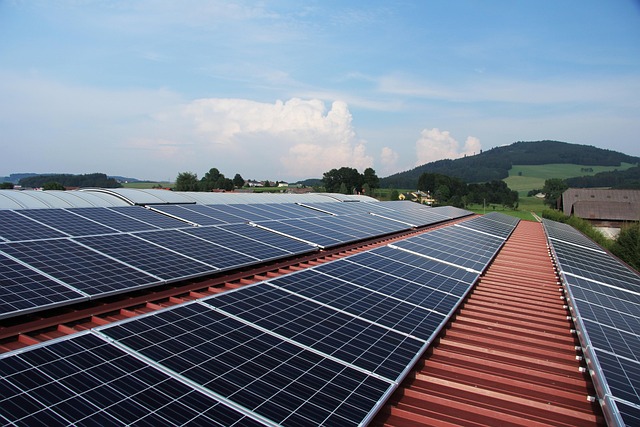
Solar street lights offer a novel solution for urban illumination. These fixtures utilise photovoltaic panels to convert sunlight into electricity, which is stored in batteries for night-time lighting.
-
The core advantage of solar street lights lies in their energy independence. Unlike conventional lights reliant on grid power, solar systems operate as self-contained power generation units, eliminating the need for transmission lines and consuming no external electricity.
-
Simplicity of installation represents another significant benefit. As complex cable routing is unnecessary, the installation process is significantly simplified, saving substantial installation costs and time. This characteristic makes solar street lights particularly suitable for remote areas or regions with challenging electricity access.
-
Intelligent control systems enable solar street lights to automatically switch on and off based on ambient light levels and adjust brightness as required. This smart functionality greatly enhances energy efficiency, preventing unnecessary waste.
3、 Advantages and Future Prospects of Solar Street Lights
-
From an economic perspective, solar street lights offer substantial long-term benefits. Although the initial investment is relatively high, their operational costs are extremely low, with maintenance expenses also significantly reduced.
-
Specific data indicates that while the initial installation cost of solar street lights may be 40% higher than traditional street lights, the elimination of cable and transformer installation can save over 60% in infrastructure investment in areas without grid coverage. During operation, solar street lights incur zero annual electricity costs, whereas conventional lights incur approximately ¥150 per unit annually.
-
Environmental friendliness constitutes another key advantage. As a clean energy solution, solar street lights produce no greenhouse gas emissions such as carbon dioxide, substantially reducing environmental impact.
-
Technological innovation continues to propel the solar street light industry forward. With improvements in solar panel efficiency and enhanced battery storage capacity, the performance of solar street lights continues to advance. Currently, solar street lights have a service life of 5-10 years, while photovoltaic panels can last up to 25 years, far exceeding the lifespan of traditional street lights.
-
Solar street lights are increasingly integrated with the concept of smart cities. By combining solar technology with intelligent control systems, cities can manage lighting systems more efficiently, achieving energy-saving objectives and enhancing public safety.
Data indicates that over a 10-year operational cycle, the total lifecycle cost of solar street lights is 35% lower than that of conventional street lights. This cost advantage becomes more pronounced in remote locations where grid connection expenses are higher.
Technological advancements are expanding the application of solar street lights from remote areas into urban centres. Along an increasing number of urban thoroughfares, commercial districts, and public spaces, solar street lights are progressively replacing conventional grid-powered illumination due to their reliability, environmental sustainability, and economic efficiency.
Looking ahead, with further breakthroughs in energy storage technology and the refinement of intelligent control systems, solar street lights will evolve beyond mere substitutes for traditional grids. They will become pivotal nodes within the urban energy internet, enabling self-sufficiency and the efficient distribution of energy.
Economic Analysis of Solar Street Lights: The Investment Wisdom of Green Lighting
Scalability of Solar Street Lights: Its Significance and Importance