

Can solar street lights function normally on cloudy days?
author: Jacob K
2025-11-11
Recently, with the increase in rainy and overcast weather, many citizens have raised questions about the performance of solar street lights under sunless conditions: Can these lights function normally without sunlight? The answer is affirmative. Thanks to their advanced technological design, modern solar street lights can operate continuously and stably even during continuous cloudy or rainy weather, providing reliable illumination for night-time travel .
A solar street light system is an independent, decentralized power supply system. It is not restricted by geography, does not require a power transmission and transformation system, and does not consume grid electricity, making it both environmentally friendly and energy-saving .

1、 Battery Energy Storage: The Key Support for Cloudy Day Illumination
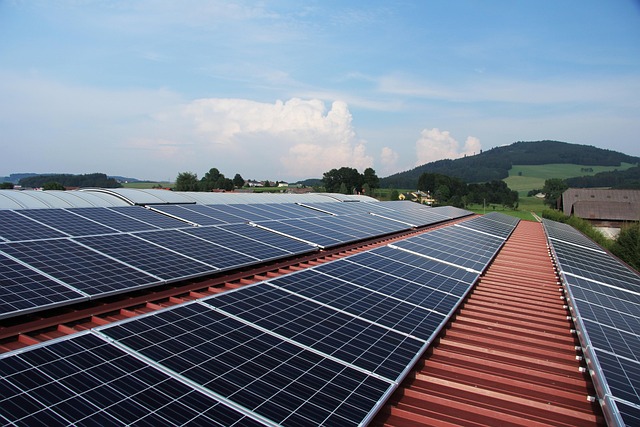
The core technology enabling solar street lights to function on cloudy days lies in their battery energy storage system. During the daytime, solar panels absorb sunlight and convert it into electrical energy, which is then stored in a rechargeable battery via a controller .
At night or when light is insufficient, the controller directs the battery to power the LED light source. This means that the light provided on cloudy nights actually comes from the electrical energy stored in the battery during sunny weather.
To ensure operation during continuous cloudy days, the capacity of the battery in a solar street light system is designed by considering the local common overcast and rainy weather conditions .
2、 Low-Light Power Generation: Supplementing Energy Even on Cloudy Days
Even on cloudy or rainy days, solar panels do not cease working completely. Modern solar panels utilize high-efficiency photovoltaic materials (such as monocrystalline silicon) to capture the faint light present on cloudy days (including ultraviolet light and scattered light), converting it into electricity to supplement the power supply .
While the power generation efficiency is reduced on cloudy days, this function still provides a certain supplement to the battery, extending the operating time of the street light .
Monocrystalline silicon solar cells are particularly suitable for areas with frequent cloudy weather or relatively insufficient sunlight due to their stable performance parameters .
3、 Intelligent Control: Balancing Energy Saving and Efficiency
The intelligent control system acts as the "brain" ensuring the stable operation of solar street lights during cloudy weather. These controllers possess various intelligent functions and automatically adjust the operating status of the street light based on environmental conditions .
The power adjustment functionis key among these. When power is limited during cloudy and rainy days, the controller can dim the light's brightness or switch to an intermittent operating mode, optimizing energy consumption and significantly extending the duration of operation .
Advanced controllers also incorporate light control, time control functions, and automatic nighttime load switching capabilities, facilitating extended operation during rainy weather. Some high-end products can even automatically identify environmental conditions and reasonably plan discharge power .
4、 Endurance Capability and Performance Enhancement Solutions
Most solar street light products available on the market are typically designed to support normal operation for 3 to 7 consecutive cloudy or rainy daysas a standard default. Some all-in-one solar street lights with higher configurations may have an even longer operation time under such conditions .
For areas prone to overcast rain or scenarios with high reliability requirements for street lighting, the cloudy day operational capability of solar street lights can be enhanced in several ways :
-
Enhancing Hardware Configuration: The most direct method is to increase the capacity of the battery to store more energy, while simultaneously selecting solar panels with higher conversion efficiency or appropriately increasing the panel area .
-
Optimizing Installation and Maintenance: Ensuring that solar panels are installed facing south without permanent shading and regularly cleaning dust from the panel surface can effectively guarantee light energy absorption efficiency .
5、 Waterproof Design and Response to Extreme Weather
Solar street lights themselves and their electrical systems feature a waterproof design, allowing them to work normally in rainy conditions. Typically, solar street lights possess an IP65 or higher waterproof rating, effectively preventing rainwater penetration .
Regarding coping with extreme weather conditions, solar street lights also employ a series of designs :
-
Strong Wind Environments: Use of high-strength materials and sturdy base designs to enhance the wind resistance of the light pole.
-
Low-Temperature Environments: Selection of batteries with excellent low-temperature performance, such as lithium iron phosphate (LiFePO4) batteries. Some products are also equipped with insulation layers or intelligent heating systems .
-
Heavy Rain and Flooding: Beyond high waterproof ratings, scientific drainage structures are adopted to avoid water accumulation damaging the equipment.
With the continuous advancement of photovoltaic technology, the application prospects of solar street lights are becoming broader. The industry is exploring innovations such as new energy storage technologies like supercapacitors, as well as diversified application scenarios like integrated charging piles.
Solar street light systems can ensure normal operation for over 15 days in cloudy and rainy weather. This data highlights the rapid technological progress and wide application potential of solar street lights .
AC/DC Hybrid Solar Street Lights: Illuminating the Future with Clean Energy
Solar Panel Cleaning Timing Guide: Key to Improving Power Generation Efficiency