

Extend Your Solar Panel Lifespan: 5 Essential Strategies Every Owner Should Know
author: Jacob K
2025-08-16
Solar panels are a cornerstone of sustainable energy, with most manufacturers promising a 25-year lifespan. Yet real-world data reveals significant variations—some systems degrade within 15 years, while others operate efficiently for 40+ years. This disparity stems from environmental factors, maintenance practices, and technological choices. Maximizing longevity isn’t just ecological; it’s economic. A well-maintained system can delay replacements by 10–15 years, boosting ROI by 30% or more.
What Impacts Solar Panel Lifespan?
Five key factors dictate degradation rates:
1. Environmental Stressors:
-
Heat: Temperatures >77°F (25°C) accelerate decay. For every 1.8°F (1°C) above this threshold, efficiency drops 0.5%.
-
Humidity: Moisture corrodes electrical connections, reducing output by 1% per 10% humidity increase.
-
Physical Damage: Hailstorms cause micro-cracks; debris scratches anti-reflective coatings.
2. Material Quality:
Monocrystalline silicon panels degrade slower (0.3–0.8%/year) than polycrystalline (0.5–1%) or thin-film (1–1.5%). UV-resistant encapsulation materials prevent yellowing and delamination.
3. Installation Flaws:
Poorly angled mounts create "hot spots," increasing local temperature by 68°F (20°C) and triggering early failure. Roof proximity under 3 inches restricts airflow, overheating panels.
4. Neglected Maintenance:
Dust accumulation cuts efficiency by 15–25% in arid regions; bird droppings induce permanent staining. Corroded connectors reduce energy transfer by up to 20%.
5. System Load Mismanagement:
Overloading inverters forces 24/7 operation, shortening their lifespan (typically 10–15 years) by 30%.
5 Simple Strategies to Extend Solar Panel Life
1. Optimize Cleaning Routines
-
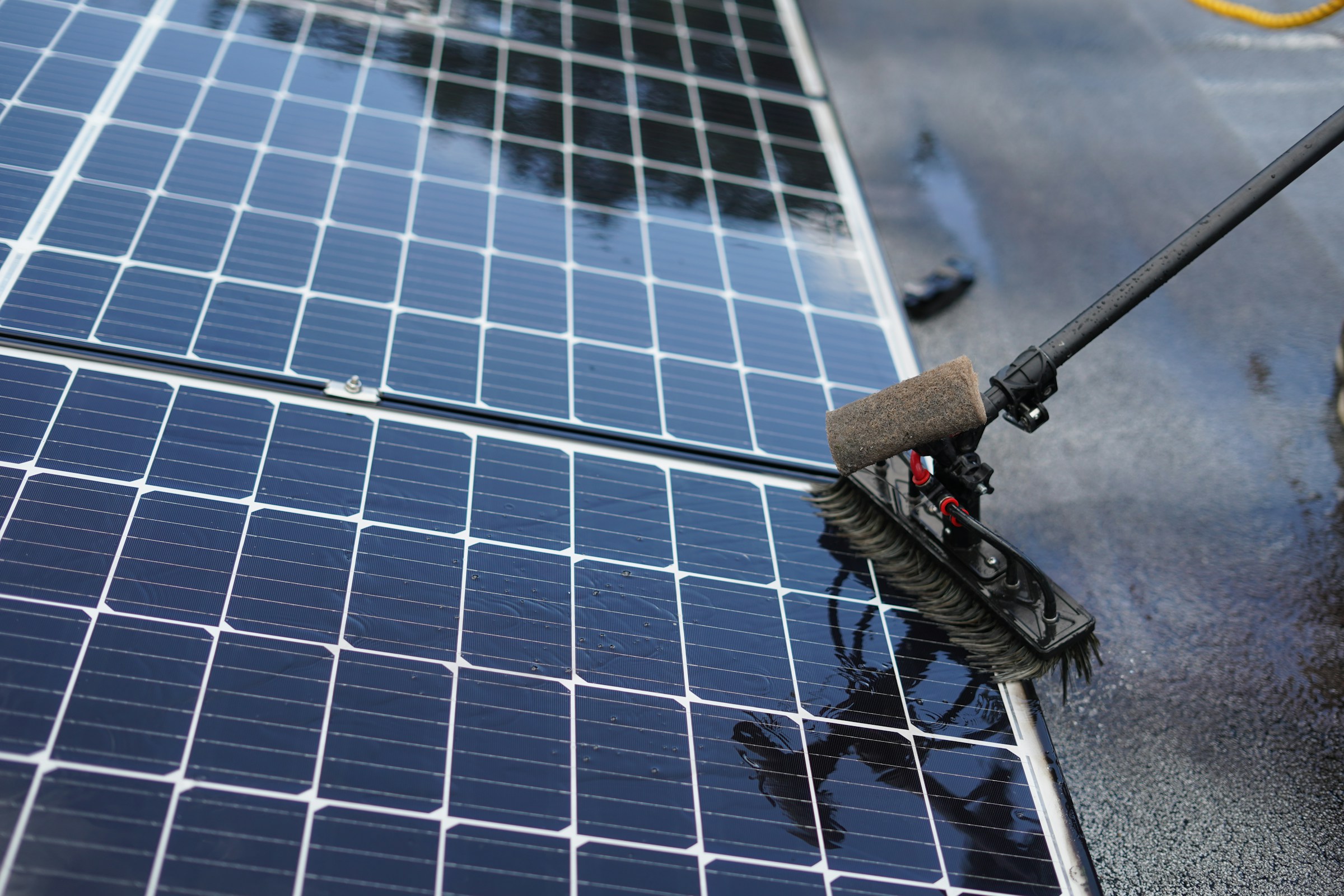
Frequency: Clean every 3–6 months (monthly in deserts/industrial zones).
-
Method: Use soft brushes with deionized water at dawn/dusk. Avoid abrasive tools and high-pressure sprays.
-
Impact: Restores 95% of dust-related efficiency loss; prevents "cell shading" damage.
2. Proactive Environmental Protection
-
Critter Deterrence: Install mesh guards to block birds and rodents from nesting under panels.
-
Tree Management: Trim branches within 10 ft to minimize shade and physical damage.
-
Extreme-Weather Prep: In hail-prone areas, add acrylic shields; in snow zones, use tilt mounts for self-clearing.
3. Smart Performance Monitoring
-
Tools: Use apps like EcoFlow or SolarEdge to track voltage, current, and kWh output.
-
Red Flags: Investigate if:
-
Single-panel output drops >15% vs. neighbors
-
Inverter reports voltage fluctuations
-
Annual degradation exceeds 1%
4. Biannual Professional Inspections
Certified technicians can:
-
Detect micro-cracks with electroluminescence imaging.
-
Test connections for corrosion using thermal cameras.
-
Verify grounding integrity to prevent electrical fires.
Cost: 150–300/year—far cheaper than $2,000+ for panel replacement.
5. Strategic Upgrades
-
Batteries: Replace lead-acid units every 5 years; lithium-ion lasts 10–15 years.
-
Inverters: Upgrade to hybrid models (e.g., SolarEdge) with 99% efficiency and 12-year warranties.
-
Retrofits: Add graphene coatings (per Chinese research) to reduce thermal expansion by 74%, extending life by 10+ years.
Conclusion: Longevity as Sustainable Economics
Solar panels aren’t disposable—they’re long-term infrastructure. Implementing these five practices can push system lifespans beyond 30 years while maintaining >80% efficiency. As Dr. Lin Wei of the Shanghai Solar Institute notes: "A panel’s age is less about time than care. Treat it like a high-performance vehicle: regular maintenance unlocks decades of peak service."
5 Simple Tips To Extend The Life Of Your Solar Batteries
Solar Street and Landscape Light