

An Analysis of the Six Core Components of Off-Grid Lighting Systems
author: Jacob K
2025-10-31
Off-grid lighting systems, as independent solutions separate from the traditional power grid, are gaining widespread application globally due to their clean, efficient, and low-maintenance characteristics. According to the latest industry reports, China's off-grid solar lighting market is expected to reach approximately 220 billion RMB by 2025, showing rapid growth momentum .
These systems not only provide reliable lighting solutions for remote areas but also demonstrate significant potential in urban lighting, emergency response, and other fields .

1. The Composition of Six Core Components
-
Off-grid lighting systems consist of six key components working in synergy, forming a complete closed loop for energy collection, storage, and use. Solar panels are responsible for energy harvesting, batteries undertake energy storage, the controller acts as the intelligent management center, LED fixtures provide efficient lighting, and the light pole serves as the physical support structure .
-
The highly coordinated operation of these components enables the off-grid lighting system to function independently of the power grid. Depending on the application scenario and power requirements, the specifications and configurations of the components can vary significantly, from simple garden lights to complex road lighting systems, but the basic principles remain consistent .
2. Solar Panels
-
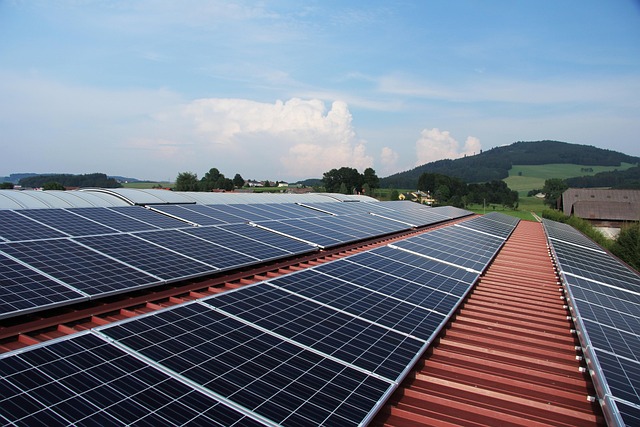
Solar panels are the energy converters of the off-grid lighting system and its power source. They convert solar energy directly into direct current electricity through the photovoltaic effect, and their performance directly impacts the entire system's efficiency .
-
The mainstream solar panels in the market primarily use monocrystalline or polycrystalline silicon materials, accounting for over 90% of applications; the conversion efficiency and service life of these materials have been widely validated. With technological advancements, the conversion efficiency of high-efficiency solar panels has increased from about 18% in 2018 to 22% in 2023, while the overall system cost has decreased by 20% .
-
The service life of solar panels can generally reach over 20 years, and modern technology ensures that the output power degradation typically does not exceed 20% within a 20-year service period. To ensure reliable operation under harsh conditions, the design must consider the 'worst-case' seasonal operating conditions, particularly solar radiation in winter .
3. Battery System
-
The battery is the energy storage core of the off-grid lighting system, responsible for storing the electrical energy converted by the solar panels and supplying power to the lighting load at night or on cloudy/rainy days. Depending on the application scenario, off-grid lighting systems can use various types such as lead-acid batteries, nickel-metal hydride batteries, and lithium iron phosphate batteries .
-
The battery capacity determines the system's continuous operation time under conditions without sunlight, making it a key factor in ensuring the stable operation of the lighting system. In design, it is essential to comprehensively consider the local consecutive cloudy/rainy days and the interval between such periods to determine the appropriate battery capacity .
-
Currently, the average service life of qualified solar street light batteries can reach over five years. The depth of discharge and the number of charge-discharge cycles directly affect the battery's service life, thus requiring coordinated design with the controller's protection mechanisms .
4. Charge-Discharge Controller
-
The charge-discharge controller is the intelligent management hub of the off-grid lighting system, undertaking the operation coordination and optimization tasks for the entire system. High-quality controllers can set reasonable overcharge and over-discharge points based on the battery's characteristics, effectively extending the battery's life .
-
The core functions of the controller include light control, time control, overcharge protection, over-discharge protection, and reverse connection protection. Advanced controllers also integrate Maximum Power Point Tracking (MPPT) functionality, which can maximize the conversion of sunlight collected by the solar modules into electricity, improving system efficiency by over 30% .
-
Modern controllers use a series PWM charging main circuit combined with an automatic float charge control strategy, reducing the voltage loss in the charging circuit by nearly half compared to circuits using diodes. The intelligent control system in current controllers can operate normally for about 10 years .
5. LED Lighting Fixtures
-
The LED fixture, as the system's lighting terminal, directly converts electrical energy into light energy. Compared to traditional light sources, LEDs have significant advantages: their luminous efficacy currently reaches 90-110 lm/W, with low lumen depreciation—less than 3% per year—allowing them to meet road illumination requirements even after 10 years of use .
-
The average service life of LED light sources can reach over 50,000 hours, several times that of traditional high-pressure sodium lamps. This means that, operating 8 hours per day, an LED light source can last about 17 years before needing replacement .
-
Furthermore, LED fixtures feature unique secondary optical designs that can precisely project light onto the required areas, further improving light utilization efficiency. Compared to traditional high-pressure sodium lamps, the energy-saving effect of LED street lights is significant, achieving over 60% energy savings .
6. Light Pole and Structural Components
-
The light pole is the physical support of the off-grid lighting system, requiring high standards for hardness, height, wind resistance, and anti-corrosion performance. The commonly used pole material is Q235 steel, processed through a series of steps and hot-dip galvanized on the surface according to the GB/T13912-92 standard, with an anti-corrosion coating of 80um .
-
The pole design must consider the installation environment and usage requirements. For instance, for a 30-meter wide road, a configuration with bilateral symmetrical arrangement, an installation height of 10-12 meters, and a spacing of 30 meters is reasonable. The fixture's overhang should not exceed one-fourth of the installation height, and the tilt angle should not exceed 15 degrees .
-
Poles treated with the hot-dip galvanizing process have excellent anti-rust and anti-corrosion capabilities, easily achieving an anti-rust effect lasting over ten years. Within a 20-year service life, typically only two replacements are needed to ensure the pole's stability .
Future off-grid lighting systems will develop towards higher efficiency, longer lifespan, and lower maintenance costs. It is expected that by 2025, the conversion efficiency of high-efficiency solar panels will reach 25%, and system costs will decrease by another 15%. These advancements will further expand the application scenarios of off-grid lighting, providing reliable lighting solutions for more areas without electricity or with power shortages .
Solar Panel Cleaning Timing Guide: Key to Improving Power Generation Efficiency
5 Types of Solar Street Lights You Should Avoid