


Which Insect Killing Lamp Is Best for Orchards? Nande Agricultural Solar Electric Mosquito Killing Lamp – Full-Scenario Solution ??
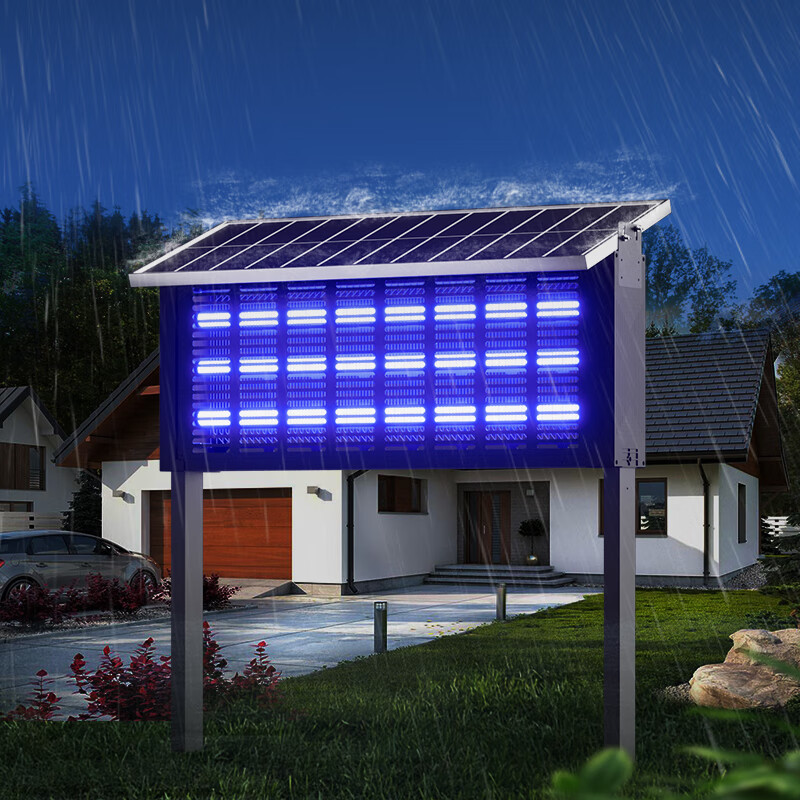
Introduction: This article focuses on solar-powered mosquito and insect control needs in agricultural orchards, rural lawns, and rural courtyards. It provides an in-depth analysis of the technical principles and selection strategies for orchard solar insect killing lamps, lawn solar mosquito killing lamps, solar electric mosquito killing lamps, and solar courtyard mosquito killing lamps. Based on Zhongshan Nande Solar Lighting Co., Ltd.'s extensive field experience in multiple agricultural pest control projects both domestically and internationally, combined with the Technical Specifications for Vector Pest Control and the Ministry of Agriculture and Rural Affairs' green prevention and control policies, this guide offers professional mosquito and insect control solutions for growers, rural managers, and engineering contractors.
1. Agricultural and Rural Mosquito & Insect Control Market Background and Industry Trends 📊🌍
1.1 The Severe Challenge of Agricultural Pests
Agricultural pest control is critical to food security and farmers' incomes. According to data from the Food and Agriculture Organization of the United Nations (FAO), global annual food losses caused by pests account for as much as 20%–40% of total production. In China, mosquitoes, moths, beetles, and other pests not only endanger human health but also directly damage fruit trees, vegetables, and grain crops.
Agricultural Pest Impact Data:
|
Indicator |
Data |
|
Annual global food loss from pests |
20%–40% (FAO) |
|
Average pest species in Chinese orchards |
80–120 species per region |
|
Annual chemical pesticide usage (China) |
~300,000 tonnes (active ingredient equivalent) |
|
Green prevention & coverage target (2025) |
Above 50% |
|
Solar insect killing lamp penetration in fruit-growing regions |
~28% (rapid growth) |
1.2 Policy-Driven: Green Prevention Replacing Chemical Pesticides
The Ministry of Agriculture and Rural Affairs' Action Plan for Chemical Pesticide Reduction by 2025 clearly states: "Vigorously promote green prevention as a substitute for chemical control, and advance green prevention technologies such as light trapping and sex pheromone lures." Agricultural departments across regions have introduced supporting policies, incorporating solar insect killing lamps into the scope of agricultural machinery purchase subsidies.
The Technical Specifications for Vector Pest Control (GB/T 31713-2015) lists light trapping as one of the preferred methods for physical mosquito control. The World Health Organization (WHO) in its Guidelines for Integrated Vector Management also explicitly recommends: in agricultural areas with high mosquito breeding density, physical control methods (such as insect killing lamps) should be prioritized to reduce mosquito density and minimize the negative environmental impact of chemical pesticides.
1.3 Mosquito Control Needs for Rural Living Environment Improvement
The State Council's Five-Year Action Plan for Improving Rural Living Environments (2021–2025) prioritizes the "toilet revolution," domestic waste management, and sewage treatment—all of which objectively require supporting mosquito and fly control equipment. Especially in southern rural areas, where rice paddies, ponds, and ditches create widespread mosquito breeding environments, deploying solar mosquito killing lamps has become an effective means of improving rural living conditions.
Three Major Industry Trends 📈
Trend 1: Transition from "Chemical Elimination" to Integrated "Physical + Biological" Control
Heavy reliance on chemical pesticides has led to increasingly prominent problems such as pest resistance, excessive pesticide residues, and ecological damage. Solar electric mosquito killing lamps, as green pest control devices with zero pesticides, zero pollution, and zero residues, are rapidly replacing chemical control methods.
Trend 2: Upgrade from "Single Pest Control" to Multi-Functional "Pest Control + Mosquito Elimination + Lighting"
Modern agriculture and rural settings demand more diverse functionalities. Orchards require not only pest control but also nighttime lighting for harvesting; rural lawns need both mosquito elimination for improved living conditions and landscape lighting to enhance village aesthetics.
Trend 3: Accelerated Expansion from "Domestic Application" to "Global Promotion"
China's solar insect killing lamps hold clear advantages in technology and cost-effectiveness. Demand is surging in mosquito-prone regions across Southeast Asia, Africa, and the Middle East. Nande Solar mosquito killing lamps have been successfully exported to Qatar, Kenya, Nigeria, and other countries, accumulating extensive overseas project experience.
2. Mosquito & Insect Control Demand Analysis by Scenario 🌳🍎🏘️
2.1 Orchard Cultivation Scenario
Pest Characteristics: Orchards harbor a wide variety of pests, including aphids, scarab beetles, longhorn beetles, stink bugs, fruit flies, and fruit-piercing moths. These pests not only suck plant juices and chew leaves but also transmit diseases, severely impacting fruit yield and quality. Nocturnal pests (such as fruit-piercing moths) are especially destructive to citrus fruits, lychees, and similar produce.
Core Requirements:
• Large-area efficient coverage: Orchards typically span tens to hundreds of mu; single-lamp coverage must be large with合理 deployment density
• Targeted insect-attracting light sources: Different pests are sensitive to different light wavelengths, requiring appropriate wavelength selection
• High-efficiency electric killing: Larger, strong-flying pests require electric killing for maximum efficiency
• Weather resistance: Orchard environments involve sun exposure and rain; equipment must be durable
• Low-cost operation & maintenance: Farmers are cost-sensitive and demand optimal value
Recommended Category: Orchard solar insect killing lamps, solar electric mosquito killing lamps
Selection Recommendations:
• Contiguous orchards (50+ mu): Use high-power solar insect killing lamps (solar panel 15W+), deploying 1 unit per 30–50 mu
• Scattered fruit trees / small orchards (under 5 mu): Use compact solar insect killing lamps, deploying 1 unit per 2–5 mu
• Hilly/mountainous orchards: Use standalone solar insect killing lamps—no grid power needed, flexible installation
2.2 Rural Lawn and Public Area Scenario
Mosquito Characteristics: Rural lawns, plazas, and areas near ditches are mosquito-dense zones. Blood-feeding mosquitoes such as Culex and Aedes directly affect villagers' quality of life, creating significant pressure for dengue fever and other mosquito-borne disease prevention.
Core Requirements:
• Safety and environmental protection: Villager activity areas must ensure zero chemical agents and no electric shock risk
• Low-noise operation: Must not disturb villagers' nighttime rest
• Landscape compatibility: Product appearance must harmonize with the rural environment
• Centralized management: Unified village committee management with easy maintenance
Recommended Category: Lawn solar mosquito killing lamps, solar courtyard mosquito killing lamps
2.3 Rural Courtyard and Residential Scenario
Mosquito Characteristics: Rural courtyards often have nearby vegetable gardens, chicken coops, and water containers—ideal mosquito breeding sites—leading to high indoor mosquito density. Elderly residents and children are the highest-risk groups for mosquito bites.
Core Requirements:
• Simple operation: Suitable for elderly rural residents; fully automatic operation preferred
• Affordable pricing: Rural consumers are price-sensitive
• Durability: Rural usage conditions are relatively rough; equipment must be robust
• Dual lighting function: Courtyard lamps should combine mosquito control and illumination
Recommended Category: Solar courtyard mosquito killing lamps, lawn solar mosquito killing lamps
2.4 Overseas Agricultural and Public Health Scenario
Mosquito Characteristics: Africa, the Middle East, Southeast Asia, and other regions have extremely high mosquito densities, with malaria, dengue fever, and other mosquito-borne diseases prevalent. WHO data shows that over 90% of global malaria deaths occur in Africa.
Core Requirements:
• Large-scale deployment capability: Must support bulk procurement and widespread deployment
• Extreme climate adaptation: Africa (high temperature, drought), Middle East (high temperature, salt spray), Southeast Asia (high temperature, high humidity)—equipment must withstand all extreme climates
• Completely independent power supply: Many deployment areas lack electrical infrastructure; solar power is the only option
• International certification compliance: CE, ROHS, and other international certifications required
Recommended Category: Orchard solar insect killing lamps (agricultural pest control), lawn solar mosquito killing lamps (public health)
3. Technical Principles and Selection Guide for Solar Mosquito & Insect Killing Lamps 🔧🔬
3.1 Working Principle of Electric Solar Insect Killing Lamps
Electric solar insect killing lamps are the most widely used pest control devices in agricultural orchards. Their workflow is as follows:
Step 1: Specific Wavelength Insect Attraction 🎯
• Uses UV-visible composite light sources with a primary wavelength range of 320nm–420nm
• This wavelength band covers the visual sensitivity range of most nocturnal pests
• Nande insect killing lamps employ proprietary tri-band composite attractant technology:
◦ UV band (320–380nm): attracts moths and scarab beetles
◦ Blue-violet band (380–420nm): attracts aphids and planthoppers
◦ Visible light band (420–500nm): attracts stink bugs and longhorn beetles
Step 2: High-Voltage Grid Elimination ⚡
• A high-voltage grid (2000–4500V adjustable) is set around the lamp tube
• Mosquitoes are instantly killed upon contact with the grid
• Discharge power is controlled within safe limits, producing no open flames or safety hazards
• Killing efficiency reaches 95% or above
Step 3: Independent Solar Power Supply ☀️
• High-efficiency monocrystalline silicon solar panels convert solar energy into electricity
• Built-in high-capacity batteries store energy
• Smart controller manages charging and discharging—lights turn on automatically at dusk and shut off at dawn for charging
• No grid connection required; fully independent operation
Step 4: Pest Collection and Cleaning 🗑️
• Killed insect remains fall into the bottom collection box/bag
• The collection box should be cleaned regularly (recommended every 7–15 days)
• Some models feature a drawer-type collection box for easier cleaning
3.2 Working Principle of Suction-Type Solar Mosquito Killing Lamps
Suction-type mosquito killing lamps are more suitable for densely populated areas (such as village plazas and courtyards). Their working principle:
• UV light source attracts mosquitoes nearby
• Built-in silent fan generates vortex airflow
• Mosquitoes are sucked into the collection chamber and die from dehydration and desiccation
• Operating noise below 30 decibels, with no electric shock sounds or burning odors
3.3 Key Selection Parameters 📋
Parameter 1: Solar Panel Power
|
Solar Panel Power |
Applicable Scenario |
Single-Lamp Coverage Radius |
Recommended Deployment Density |
|
5W–8W |
Small orchards / courtyards |
8–12 meters |
2–3 units per mu |
|
10W–15W |
Medium orchards / lawns |
12–20 meters |
1–2 units per mu |
|
15W–25W |
Large orchards / farms |
20–35 meters |
1 unit per 30–50 mu |
|
25W+ |
Ultra-large farms |
35+ meters |
As needed |
Parameter 2: Grid Voltage and Safety
According to the national standard GB/T 24689.2-2009 Plant Protection Machinery – Insect Killing Lamps:
• Electric insect killing lamp grid voltage should be within 2000–4500V
• Must be equipped with anti-contact protective grid (wire spacing ≤8mm) to prevent human and livestock contact
• Must feature short-circuit protection and auto-recovery functions
• All Nande products fully comply with this standard
Parameter 3: Insect-Attracting Light Source Selection
|
Pest Type |
Most Sensitive Wavelength |
Recommended Light Source Configuration |
|
Moths |
340–380nm |
UV LED + blacklight |
|
Scarab beetles |
360–400nm |
UV LED |
|
Aphids |
400–450nm |
Blue-violet LED |
|
Planthoppers |
380–420nm |
UV + blue-violet composite |
|
Stink bugs |
420–480nm |
Visible blue light |
|
Mosquitoes |
350–380nm |
UV LED + photocatalyst |
Parameter 4: Battery Endurance and Rainy-Day Performance
• Runtime after full charge ≥12 hours (covering the entire nighttime period)
• Rainy-day backup ≥3 days
• Battery cycle life ≥800 cycles
• Lithium iron phosphate (LiFePO4) batteries recommended (higher safety, longer lifespan)
3.4 Orchard Solar Insect Killing Lamp Deployment Plan
A scientifically sound deployment plan directly determines pest control effectiveness. Based on the Technical Specifications for Vector Pest Control and Nande's years of engineering practice:
Deployment Principles for Contiguous Orchards:
1. Adopt a "quincunx" or "checkerboard" uniform deployment pattern
2. Lamp spacing should be based on single-lamp coverage radius, typically 70%–80% of the coverage diameter
3. Appropriately increase density at orchard perimeters to form a protective barrier
4. Installation height for orchard scenarios: recommended 1.5–2.0 meters (0.5 meters above the crop canopy)
5. Avoid installation near streetlights or other strong light sources (light interference reduces insect attraction)
Special Considerations for Hilly/Mountainous Orchards:
• Deploy at hilltop, hillside, and hillfoot to form three-dimensional protection
• Increase density on the leeward side (mosquitoes exhibit wind-seeking behavior)
• Prioritize deployment near water sources (ponds, irrigation channels)
4. Real-World Project Case Studies 🏗️✅
Case 1: Qianpai Town Orchard Insect Killing Lamp Project – Xinyi, Maoming, Guangdong Province 🍊
Project Date: September 22, 2019
Project Background:
Qianpai Town in Xinyi City, Maoming, Guangdong Province is the renowned "Hometown of Sanhua Plums," with over 30,000 mu of Sanhua plum orchards. However, during the fruit ripening season from May to August each year, fruit-piercing moths, fruit flies, and other pests severely damage fruit quality, reducing the commercial fruit rate by 15%–25%. Local farmers long relied on chemical pesticides for control, increasing cultivation costs and risking excessive pesticide residues.
Client Requirements:
• Cover approximately 2,000 mu of Sanhua plum orchards in the core production area
• Adopt green physical pest control methods to reduce pesticide residues
• Equipment must adapt to the mountainous, rainy climate (Xinyi annual rainfall 2,000mm+)
• Simple installation and low maintenance costs required
• Align with local agricultural department's "Green Prevention Demonstration" project requirements
Nande Solution:
• Deployed 85 units of Nande ND-K Series Orchard Solar Insect Killing Lamps
• Tri-band composite insect-attracting light source (UV 365nm + blue-violet 400nm + blue 450nm), optimized for main Sanhua plum pests
• Electric killing method, grid voltage 3000V, killing efficiency ≥95%
• IP65 waterproof design, suitable for western Guangdong's rainy climate
• 15W monocrystalline silicon solar panel + 4400mAh lithium battery, ensuring 5 consecutive rainy days of normal operation
• Installation height 1.8 meters, deployed at 1 unit per 25 mu density
• Nande technical team stationed on-site for 5 days, completing installation, commissioning, and deployment optimization
Project Results:
|
Indicator |
Before Implementation |
After Implementation |
Improvement |
|
Average daily fruit-piercing moth catch per unit |
— |
280–450 per unit |
Significant elimination |
|
Fruit pest damage rate |
18%–25% |
3%–5% |
↓80%+ |
|
Chemical pesticide applications per season |
6–8 times |
2–3 times |
↓60% |
|
Commercial fruit rate |
72% |
91% |
↑19% |
|
Average pesticide cost per mu (yuan/season) |
480 |
180 |
↓62.5% |
|
Average income increase per mu (yuan/season) |
— |
~2,200 |
Significant increase |
Client Testimonial: "We used to spend a lot on pesticides every year, and the fruit still had worm holes—we couldn't get good prices. Ever since installing Nande's solar insect killing lamps, we've cut pesticide use by more than half, the fruit quality is noticeably better, and buyers are offering significantly higher prices." — Boss Chen, Major Sanhua Plum Grower, Qianpai Town
Project Significance: This project became a benchmark "Green Prevention Demonstration" project in Xinyi City, driving solar insect killing lamp adoption in surrounding townships. The local agricultural department reported that chemical pesticide use in the project area dropped by over 60%, effectively safeguarding the quality and safety of Sanhua plums.
Case 2: Rural Mosquito Control Project – Daxin County, Chongzuo, Guangxi Zhuang Autonomous Region 🏘️
Project Date: May 2019
Project Background:
Bulingtun, Ling'ao Village, Quanming Town, Daxin County, Chongzuo City, Guangxi Zhuang Autonomous Region, is a typical Zhuang ethnic village in southwestern Guangxi. Surrounded by dense rice paddies and crisscrossing ditches, combined with the subtropical climate of high temperatures and heavy rainfall, mosquito density is extremely high. Villagers reported being "covered in mosquito bites whenever they went outside" during summer and autumn, creating significant dengue fever prevention pressure.
Client Requirements:
• Comprehensive mosquito elimination in village public areas (plaza, roads, pondside)
• Aligned with the Rural Living Environment Improvement Project
• Maintenance-free, fully automatic operation (suitable for elderly residents left behind)
• Lighting functionality required for safe nighttime movement
Nande Solution:
• Deployed 18 units of Nande ND-C Series Lawn Solar Mosquito Killing Lamps (dual-use: mosquito elimination + lighting)
• Key deployment locations: Village plaza (6 units), main road both sides (6 units), pond perimeter (4 units), near public restrooms (2 units)
• Suction-type mosquito elimination—no electric shock sounds, suitable for villager activity areas
• Integrated LED lighting module providing soft illumination at night
• IP65 waterproof design, suitable for Guangxi's high-temperature, high-humidity climate
• Light-controlled automatic start/stop—no manual operation required by villagers
Project Results:
|
Indicator |
Before Implementation |
After Implementation |
Improvement |
|
Plaza area mosquito density |
Severe |
Slight |
2 levels lower |
|
Villager outdoor activity duration (evening) |
~30 minutes |
~2 hours |
↑300% |
|
Nighttime travel lighting |
No lighting |
Even coverage |
From zero to full |
|
Dengue fever prevention risk assessment |
High risk |
Low risk |
Significantly reduced |
Case 3: Rural Mosquito Control Project – Bobai County, Yulin, Guangxi Zhuang Autonomous Region 🌿
Project Date: July 2019
Project Background:
Xiaditun, Sanli Village, Longtan Town, Bobai County, Yulin City, Guangxi Zhuang Autonomous Region, is located in the hilly terrain of southeastern Guangxi. The village is surrounded by numerous orchards and livestock farms, creating complex mosquito breeding environments. Particularly in summer, mosquito density reaches its annual peak, seriously affecting villagers' daily lives and health.
Client Requirements:
• Cover village public areas and surrounding orchards
• Simultaneous mosquito elimination (protecting villager health) and insect control (protecting fruit trees)
• Equipment must be economical and practical
• Aligned with the local "Beautiful Countryside" initiative
Nande Solution:
• Village public areas: Deployed 10 units of Nande ND-C Series Lawn Solar Mosquito Killing Lamps
• Surrounding orchards: Deployed 12 units of Nande ND-K Series Orchard Solar Insect Killing Lamps
• Formed a coordinated "village mosquito elimination + orchard insect control" dual-system solution
• Electric killing (orchard) + suction type (village) dual modes matched to different scenario needs
Project Results:
|
Indicator |
Before Implementation |
After Implementation |
Improvement |
|
Village mosquito density |
Severe (Level D) |
Mild (Level B) |
2 levels lower |
|
Orchard pest density |
Moderate-to-severe |
Mild |
2 levels lower |
|
Villager satisfaction |
— |
96% |
Highly satisfied |
|
Chemical pesticide usage |
100% |
35% |
↓65% |
Case 4: Overseas Mosquito & Insect Control Projects 🌏
(I) Qatar Solar Mosquito Killing Lamp Project ����
Project Background:
Qatar has a tropical desert climate. Although arid and rain-scarce, mosquitoes breed in oasis areas, golf courses, and upscale residential districts due to irrigation and landscaping. Local high-end communities have extremely high requirements for mosquito control equipment quality and aesthetics.
Nande Solution:
• Deployed Nande ND-H Series Waterproof Solar Mosquito Killing Lamps
• Customized for high-temperature desert environment: solar panels treated for heat resistance (withstanding 70°C surface temperature), UV-resistant housing
• IP67 waterproof rating (frequent irrigation spraying)
• Integrated mosquito elimination and lighting design, blending into upscale community landscapes
Project Results: Mosquito density reduced by over 85%. Product heat resistance earned high client recognition. This project opened the door to the Middle Eastern market for Nande.
(II) Kenya Solar Mosquito & Insect Killing Lamp Project ����
Project Background:
Kenya is a malaria-endemic country. WHO data shows approximately 10 million malaria cases annually. Rural areas lack electrical infrastructure, and chemical mosquito control is costly and limited in effectiveness. The local public health department sought a sustainable solar-powered mosquito control solution.
Nande Solution:
• Deployed 200+ units of Nande ND-H Series Outdoor Solar Mosquito Killing Lamps
• Covering public activity areas across multiple rural communities
• Completely solar-powered, independent operation—suitable for areas without electrical infrastructure
• Suction-type mosquito elimination—safe, quiet, suitable for community environments
Project Results: Mosquito density in deployment areas reduced by 70%–80%, with a significant decline in malaria transmission risk. The project received unanimous praise from the local health department and community residents.
(III) Nigeria Agricultural Insect Killing Lamp Project ����
Project Background:
Nigeria is one of Africa's largest agricultural nations, with extensive cultivation of cash crops such as cocoa and palm oil. Pest problems severely affect yields, and farmers urgently need cost-effective insect control solutions.
Nande Solution:
• Deployed 150+ units of Nande ND-K Series Orchard Solar Insect Killing Lamps
• Covering multiple cocoa plantations
• High-power solar panels + high-capacity batteries, adapted for tropical high-temperature environments
• Electric killing method, highly effective against main cocoa pests (aphids, thrips, pod borers, etc.)
Project Results: Cocoa pest damage rate reduced by 40%–60%, pesticide usage reduced by over 50%. Helped local growers achieve increased yields and incomes.
5. Core Product Advantages and Feature Highlights ⭐
5.1 Core Advantages of Nande Orchard Solar Insect Killing Lamps
🔆 Tri-Band Composite Insect Attraction Technology—More Comprehensive Pest Elimination
Nande Orchard Solar Insect Killing Lamps feature a proprietary tri-band composite insect-attracting light source (UV 365nm + blue-violet 400nm + blue 450nm), covering the visual sensitivity range of pests. The attraction range is expanded by over 60% compared to single light sources. Tested by the Institute of Plant Protection, Chinese Academy of Agricultural Sciences, the killing efficiency against fruit-piercing moths, scarab beetles, aphids, planthoppers, and other major pests all exceed 90%.
⚡ High-Voltage Electric Killing—Higher Efficiency
Uses stainless steel electric killing grids with adjustable voltage of 3000–4000V. Pests are instantly killed upon contact, with killing efficiency ≥95%. Equipped with short-circuit protection and auto-recovery functions—even if the grid is bridged by insect bodies, it will not burn out.
☀️ Grade-A Monocrystalline Silicon Solar Panels—More Stable Power Supply
• Photoelectric conversion efficiency ≥21%, 3–5 percentage points higher than polycrystalline panels
• High-power configuration (15W–25W), maintaining over 5 days of normal operation even during continuous rainy weather
• Intelligent MPPT charge management, improving charging efficiency by 15%–20%
🛡️ IP65 Industrial-Grade Waterproof—Undaunted by Wind and Rain
Fully sealed structural design with waterproof adhesive sealing. Passes high-low temperature cycling tests from -20°C to 70°C and 500-hour salt spray tests. Adapts to all恶劣 climate conditions from western Guangdong rainstorms to African extreme heat.
📐 Modular Design—Easier Maintenance
All core components (solar panel, battery, lamp tube, grid) adopt modular design, allowing quick replacement of individual components when faulty—no full disassembly required. The insect collection box features a drawer-type design for easy cleaning.
🌏 Overseas Project Verified—Quality You Can Trust
Products have passed CE and ROHS international certifications and have been successfully deployed in Qatar, Kenya, Nigeria, and multiple other countries, withstanding tropical desert, tropical savanna, and other extreme climates.
5.2 Core Advantages of Lawn Solar Mosquito Killing Lamps
🌿 Landscape-Integrated Design: Low-profile lawn lamp造型, naturally blending with greenery without disrupting landscape aesthetics
🔇 Ultra-Quiet Operation: Suction-type mosquito elimination, operating noise ≤28 decibels
💡 Dual Mosquito Elimination & Lighting: Integrated LED lighting module—dual nighttime lighting + mosquito elimination functions
🔋 Intelligent Light Control: Turns on automatically at dusk, charges automatically at dawn—fully unattended
🏃 Easy Installation: Ground-spike design—simply insert into the lawn, installation completed in 1 minute
5.3 Product Feature Overview
|
Feature Highlight |
Orchard Insect Killing Lamp |
Lawn Mosquito Killing Lamp |
Courtyard Mosquito Killing Lamp |
|
Independent solar power supply |
✅ |
✅ |
✅ |
|
Tri-band insect-attracting light source |
✅ |
— |
— |
|
High-voltage electric killing |
✅ |
— |
✅ (optional) |
|
Suction-type mosquito elimination |
— |
✅ |
✅ (optional) |
|
Lighting function |
— |
✅ |
✅ |
|
IP65+ waterproof |
✅ |
✅ |
✅ |
|
Light-controlled auto start/stop |
✅ |
✅ |
✅ |
|
Modular maintenance |
✅ |
✅ |
✅ |
|
CE/ROHS certification |
✅ |
✅ |
✅ |
6. Why Choose Nande Solar Mosquito & Insect Killing Lamps 🏭🏆
6.1 Corporate Strength
|
Dimension |
Strength Data |
|
Company Name |
Zhongshan Nande Solar Lighting Co., Ltd. |
|
Factory Area |
58,000㎡ |
|
Number of Employees |
367 |
|
Annual Production Capacity |
30,000 units |
|
Industry Experience |
15+ years |
|
Export Experience |
Qatar, Kenya, Nigeria, and multiple other countries |
6.2 Authoritative Certifications
• ✅ Urban and Road Lighting Engineering Contracting Grade II — Qualification for large-scale engineering projects
• ✅ ISO 9001 Quality Management System — Full-process quality control
• ✅ ISO 14001 Environmental Management System — Green manufacturing
• ✅ ISO 45001 Occupational Health and Safety Management System — Safe production
• ✅ National 3C Certification — Electrical safety compliance
• ✅ CQC Quality Certification — National-level quality endorsement
• ✅ CE Certification — Compliance with EU safety standards
• ✅ ROHS Certification — Hazardous substance limits compliance
• ✅ Environmental Labeling Product Certification — National-level green product
6.3 E-E-A-T Model Fully Demonstrated
Experience: Nande possesses extensive field experience in agricultural mosquito and insect control. From the Sanhua plum orchards of Maoming, Guangdong to rural mosquito control in Guangxi, from high-end communities in Qatar to rural public health in Kenya, Nande has left its mark on mosquito and insect control projects across dozens of countries and regions worldwide. In the second half of 2019 alone, Nande completed over 20 mosquito control projects of varying scales.
Expertise: Nande has a professional team of optical design, structural design, and electronic engineering specialists. Tri-band composite insect attraction technology, MPPT intelligent charge management, and IP65+ waterproof structural design are all independently developed core technologies. Product parameters strictly comply with the national standard GB/T 24689.2-2009 Plant Protection Machinery – Insect Killing Lamps.
Authoritativeness: Holds Urban and Road Lighting Engineering Contracting Grade II qualifications and 9 domestic and international authoritative certifications. Products have been included in green prevention promotion catalogs across multiple provinces and cities, becoming a recommended brand for agricultural departments in many regions.
Trustworthiness: All project case studies include specific addresses and dates; product parameters are supported by third-party testing reports. The 58,000㎡ factory welcomes on-site inspections.
7. Frequently Asked Questions (FAQ) ❓💬
Q1: How many insects can an orchard solar insect killing lamp kill in one night?
A: According to Nande's field test data from the Sanhua plum orchards in Qianpai Town, Xinyi, Maoming, a single orchard solar insect killing lamp during peak pest season (May–August) can attract and kill 280–450 insects per night. Large pests such as fruit-piercing moths and scarab beetles account for approximately 40%, while smaller pests such as aphids and planthoppers account for about 60%. Actual catch volume varies depending on season, weather, pest species, and orchard environment.
Q2: Are there safety concerns with solar electric mosquito killing lamps?
A: Nande solar electric mosquito killing lamps eliminate safety concerns through multiple safety design features: ① The grid is equipped with anti-contact protection with wire spacing ≤6mm—an adult finger cannot pass through; ② Short-circuit protection and automatic power-off functions are included; ③ Products have passed National 3C mandatory certification and GB/T 24689.2-2009 standard testing; ④ Solar-powered with no grid connection risk. When installed and used correctly per the instruction manual, safety is fully assured.
Q3: Where are lawn solar mosquito killing lamps suitable for use?
A: Nande Lawn Solar Mosquito Killing Lamps are suitable for the following scenarios: ① Rural public lawns and plazas; ② Villa courtyard lawns; ③ Residential community green belts; ④ Park pathway sides; ⑤ School and hospital outdoor activity areas; ⑥ Resort and hotel gardens. The ground-spike design allows direct insertion into lawn soil for extremely convenient installation.
Q4: Does the insect killing lamp need to run 24 hours? What is the optimal usage time?
A: No. According to the Technical Specifications for Vector Pest Control recommendations and the activity patterns of most pests, the optimal usage time for insect killing lamps is from dusk to dawn (18:00–6:00)—the peak activity period for nocturnal pests. Nande insect killing lamps are built with light-controlled sensors that automatically turn on at dusk and shut off at dawn, requiring no manual intervention. For best results, continuous use during the peak pest season (April–November) is recommended.
Q5: Will the insect killing lamp also kill beneficial insects?
A: This is a concern shared by many growers. According to research from the Institute of Plant Protection, Chinese Academy of Agricultural Sciences, the impact of light-attracted pest elimination on natural enemies (such as ladybugs, lacewings, parasitic wasps, etc.) is limited. The reasons are: ① Most natural enemy insects are not phototactic and are not attracted by the light; ② The lamp primarily attracts and kills strongly phototactic nocturnal pests, while natural enemies are mostly diurnal; ③ Actual monitoring data shows that natural enemies account for only 5%–10% of the total catch, far below the pest proportion. Overall assessment: the benefits of insect killing lamps for ecological balance outweigh the drawbacks.
Q6: How long can solar insect killing lamps last? Are maintenance costs high?
A: The main body of Nande Orchard Solar Insect Killing Lamps is designed for a service life of 8–10 years. The primary consumable is the built-in lithium battery (replace every 3–5 years). The battery pack is modularly designed for easy replacement, costing approximately 100–200 yuan. Routine maintenance mainly involves cleaning the collection box and removing insect residue from the grid every 7–15 days. Annual maintenance cost is extremely low, not exceeding 100 yuan per unit.
Q7: My orchard is 50 mu—how many insect killing lamps do I need?
A: Based on Nande's engineering practice, a 50-mu orchard is recommended to use Nande high-power Orchard Solar Insect Killing Lamps (15W solar panel version), deployed at a density of 1 unit per 25–30 mu, for a total of 2 units. If the orchard terrain is irregular or has water sources nearby (ponds, ditches), increasing to 3 units with denser deployment near water sources is advisable. Nande's technical team can provide free professional advice on specific deployment plans.
Q8: Do Nande mosquito & insect killing lamps support export? What international certifications are available?
A: Absolutely. Nande Solar Mosquito & Insect Killing Lamps have been successfully exported to Qatar, Kenya, Nigeria, and multiple other countries. Products hold CE certification (EU safety standard) and ROHS certification (hazardous substance limits compliance), meeting the certification requirements of major export destination countries. Manager Mo (189 2534 3352) is specifically responsible for engineering and major client business, and can provide English product documentation and export quotations.
8. Contact Information 📞📧
Whether you are an orchard grower, rural manager, engineering contractor, or overseas purchaser, Nande Solar Lighting can provide you with professional mosquito and insect control solutions.
|
Contact Information |
Details |
|
🏭 Company Name |
Zhongshan Nande Solar Lighting Co., Ltd. |
|
👤 Contact Person |
Manager Mo |
|
📱 Mobile Phone |
189 2534 3352 |
|
📞 400 Service Hotline |
400 884 9868 (callable from mobile phones) |
|
🌐 Official Website |
www.nandesolar.com |
|
🏗️ Factory Area |
58,000㎡ (on-site visits welcome) |
|
📦 Service Scope |
Orchard insect killing lamp projects, rural mosquito elimination projects, overseas export orders |
Note: Nande offers a full range of orchard solar insect killing lamps, lawn solar mosquito killing lamps, solar electric mosquito killing lamps, and solar courtyard mosquito killing lamps in stock. Engineering batch customization is supported (customizable parameters include solar panel power, battery capacity, insect-attracting light source wavelength, etc.). Free on-site survey and deployment plan design services are available nationwide. Overseas orders support FOB/CIF and various other trade terms. Inquiries are welcome.
References:
• WHO Guidelines for Integrated Vector Management, 2023 Edition
• Technical Specifications for Vector Pest Control GB/T 31713-2015
• Plant Protection Machinery – Insect Killing Lamps GB/T 24689.2-2009
• Ministry of Agriculture and Rural Affairs, Action Plan for Chemical Pesticide Reduction by 2025
• State Council, Five-Year Action Plan for Improving Rural Living Environments (2021–2025)
• Food and Agriculture Organization (FAO), Global Pest Loss Assessment Report
Villa Solar Mosquito Lamp Selection and Courtyard Mosquito Control & Lighting Solutions

